Top

icebergs

Top 7 Most Beautiful Islands in the World

Islands have an irresistible pull, and I visit and write about them often (and even live on one). Our planet has hundreds of thousands of islands; below are a few favourites that I’ve encountered in my travels. 

7. Sardinia, Italy 

Sardinia has it all: dramatic cliffs plunging into turquoise coves, ancient history etched into the land, and a fiercely proud culture reflected in dishes found nowhere else in Italy. However long you stay on your first trip, it won’t be enough: you’ll already be planning your return before you leave. The island’s past, shaped by Phoenicians, Romans, and Spaniards, lend it a depth and diversity that makes every town feel unique. 
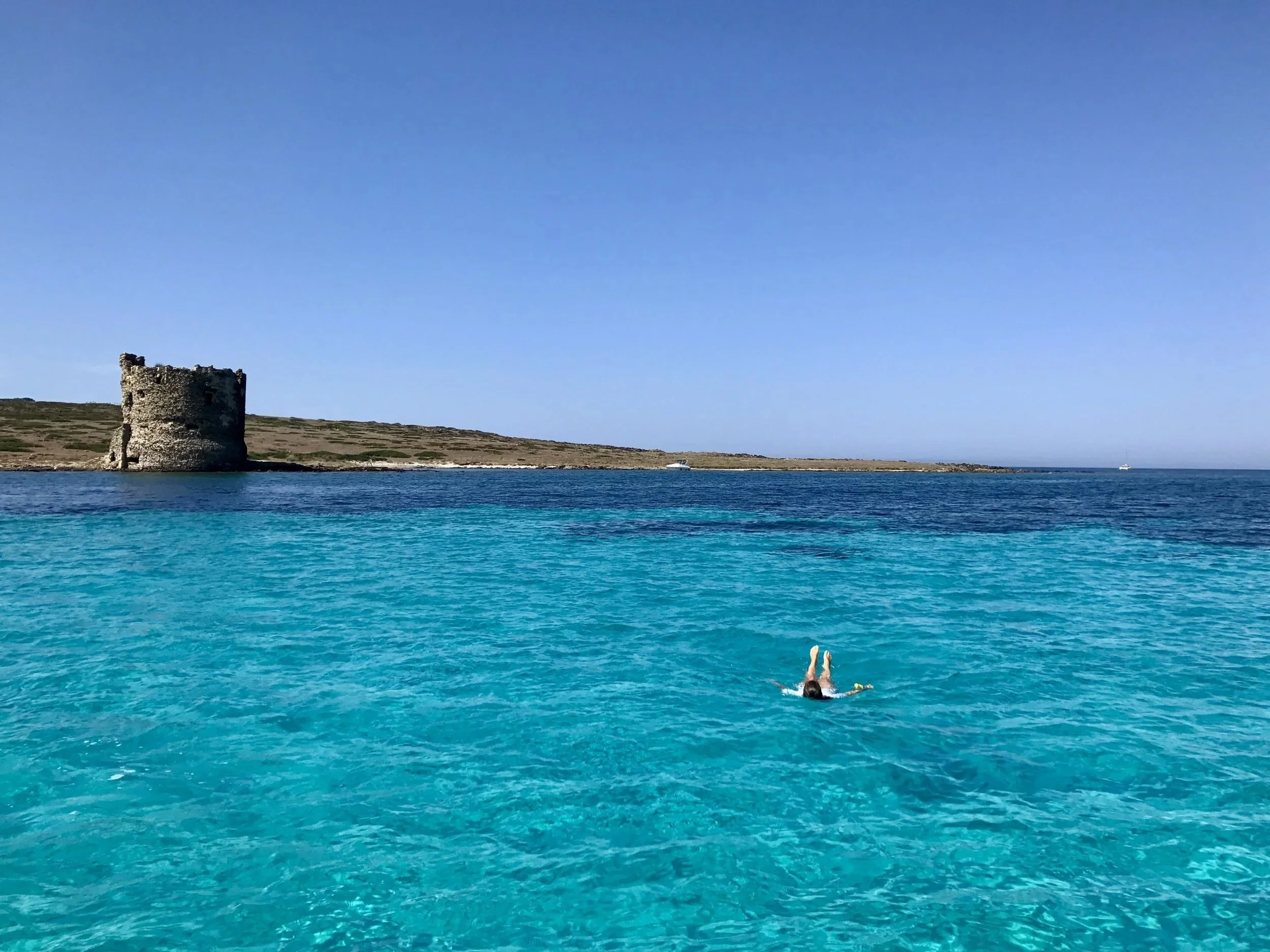
Floating off the coast of Sardinia, Italy

Read more about Sardinia here. And if you like Sardinia, you’ll also enjoy Cape Verde and St Lucia.

6. Isabela, Galapagos, Ecuador

Choosing just one Galapagos island feels unfair, but Isabela–the largest of the archipelago–captures the raw magic of the isles. Isabela is the only place on Earth where you can dive alongside marine iguanas, penguins, and sea lions at the same time. Thanks to its long-standing protected status, the wildlife here is unafraid and curious. It remains one of the most untouched and otherworldly places I’ve ever visited.
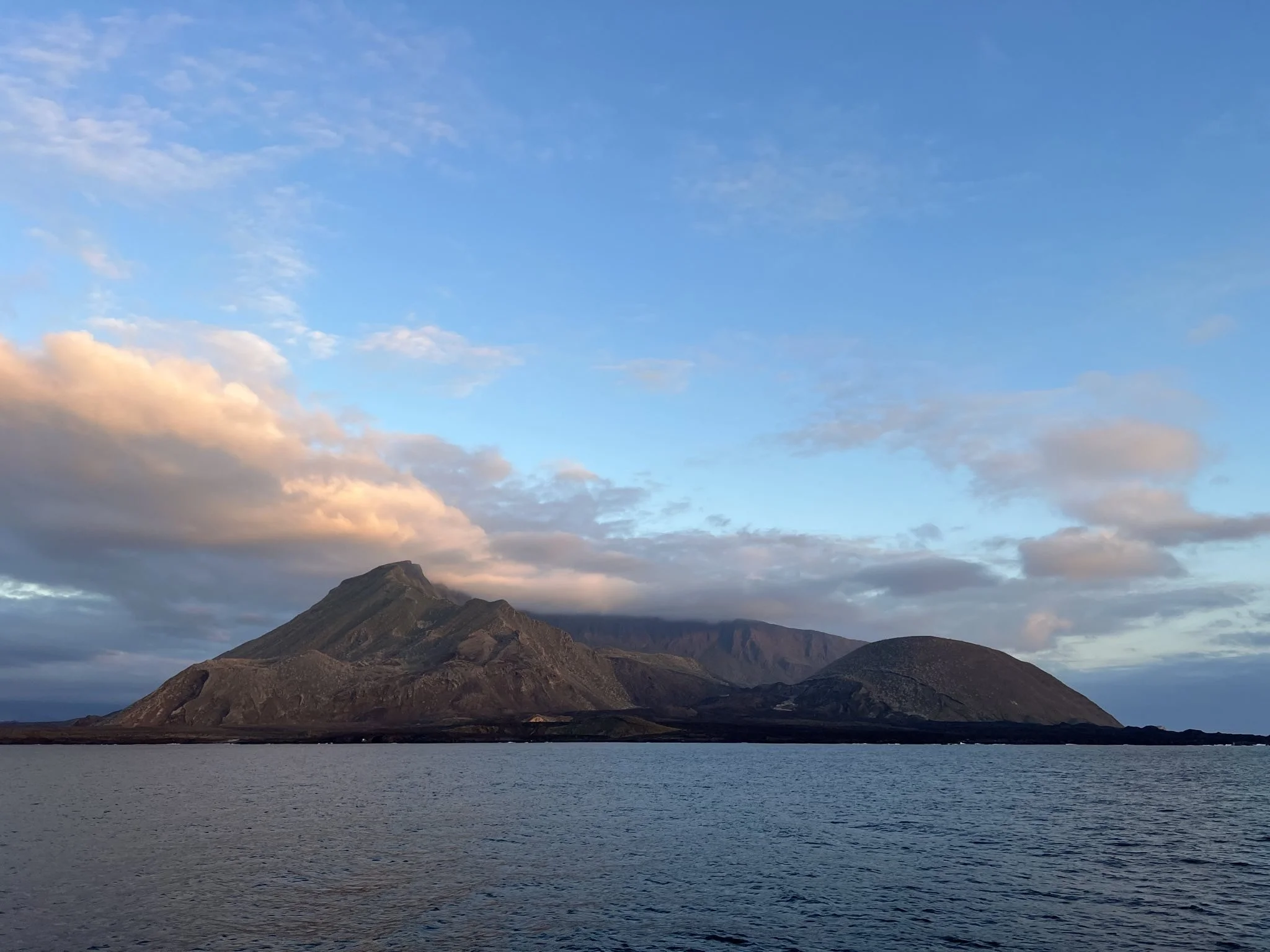
Isabela island Galapagos

Off the coast of Isabela, Galapagos, Ecuador

If you like Isabela, you’ll also enjoy South Georgia and Easter Island.

5. Faroe Islands

The Faroe Islands took me by surprise, charming me with their wild and unfiltered natural beauty, largely uninterrupted by humans. Puffins, gannets, and fulmars crowd cliff edges, waterfalls plunge straight into the ocean, and emerald-hued mountains shift constantly with whatever the ocean winds bring. Visit between May and October, when daylight stretches past midnight. Bring your hiking boots, and don’t miss booking a heimablidni (a home-cooked meal at a local’s house) for an authentic window into the Faroese culture and sustainable way of life. 
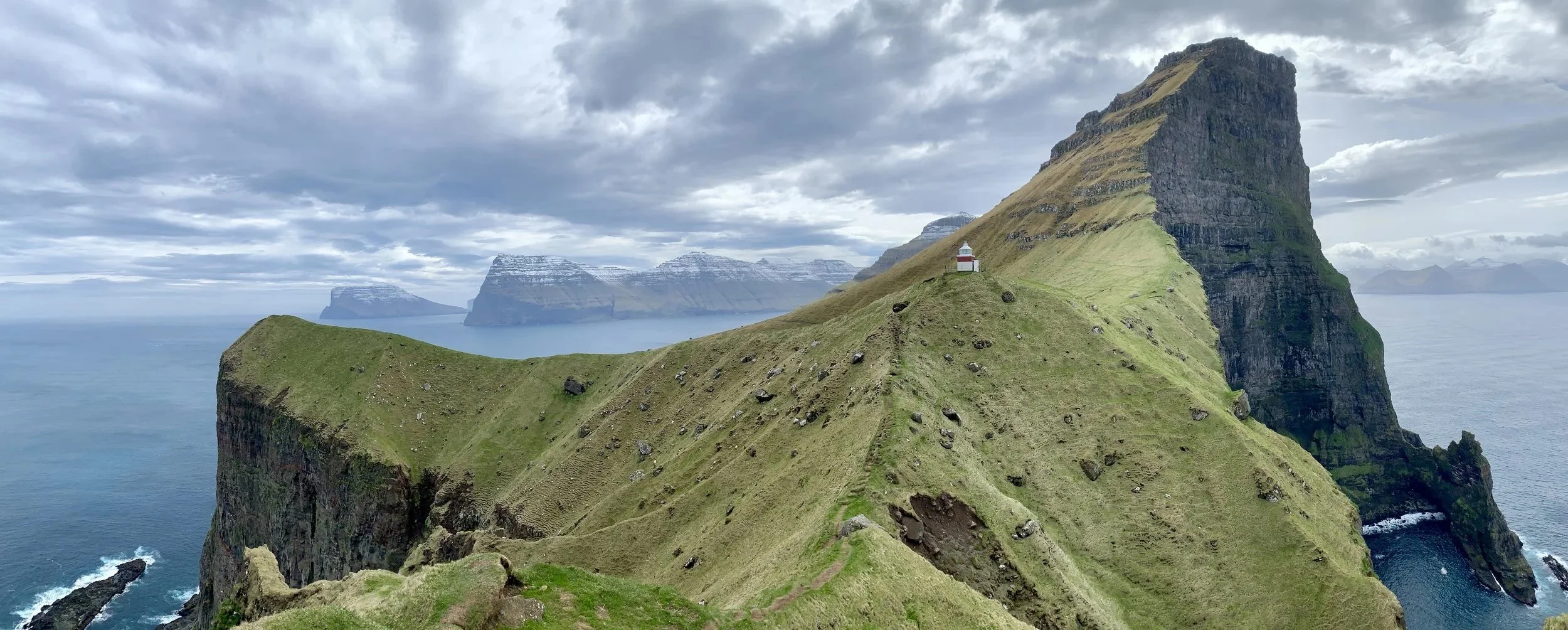
Faroe Islands Kalsoy hiking

Hiking in the Faroe Islands

Read more about the Faroe Islands here. And if you like the Faroes, you’ll also enjoy Greenland and the Shetlands.

4. North and South Islands, New Zealand

I couldn’t choose just one of New Zealand’s islands–the country is spectacular from end to end. The North Island offers geothermal landscapes, glowworm caves lit like starfields, and rich Māori culture. The South Island brings soaring peaks, glaciers, and some of the best hikes in the world. Fresh salmon, lamb, and wine top off the experience. On many trails, you are unlikely to encounter more than a handful of other people, an increasing rarity in today’s world. Needless to say, I dream of returning. 

South Island, New Zealand

Read more about New Zealand here and here. And if you like New Zealand, you’ll also enjoy the Faroe Islands and Niue

3. South Georgia

South Georgia is one of the wildest places on the planet. Apart from a few seasonal researchers, the island is uninhabited by humans and dominated by wildlife. South Georgia is home to the world’s largest king penguin colony (as well as chinstrap, macaroni, and gentoo penguins) along with massive populations of elephant seals, fur seals, and albatross. The island’s history is equally dramatic: this is where Ernest Shackleton landed after his crew’s legendary survival journey across the Weddell Sea off Antarctica. Stepping onto the island feels like stepping into a nature documentary–sure to hear David Attenborough’s voice at any moment.
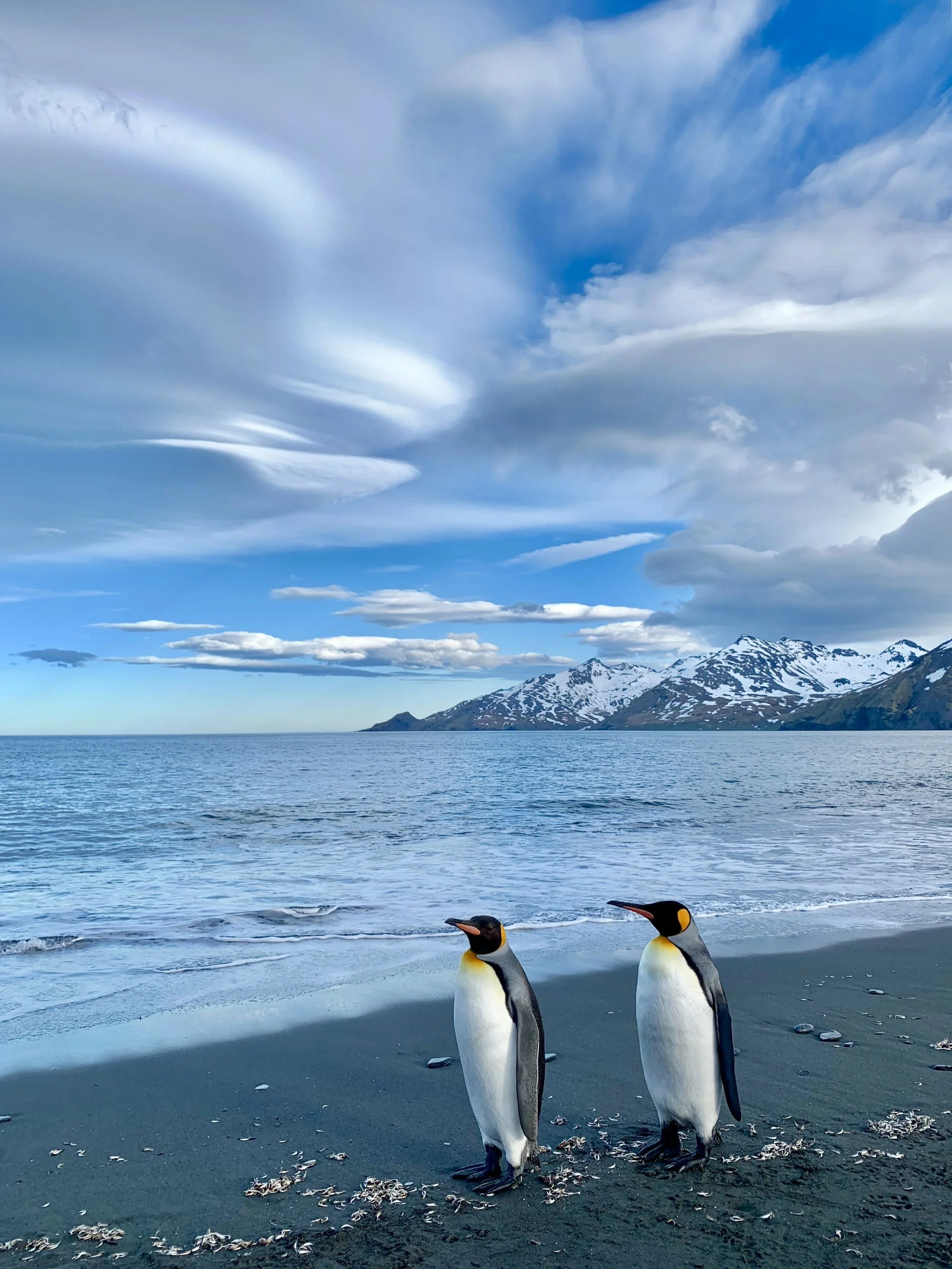
South Georgia penguins lenticular clouds

A couple of king penguins taking a stroll on South Georgia

Read more about South Georgia here. And if you like South Georgia, you’ll also enjoy the Falklands and Greenland.


2. Aldabra, Seychelles 

Aldabra is so pristine that only a handful of researchers live here year-round. It’s one of the few places on Earth where giant tortoises roam freely in astonishing numbers. Coconut crabs scuttle across the forest floor, and the lagoon hosts a thriving underwater world almost untouched by humans. Endless white-sand flats stretch into shallow turquoise water as far as you can see. If there’s a heaven on Earth, Aldabra is close.
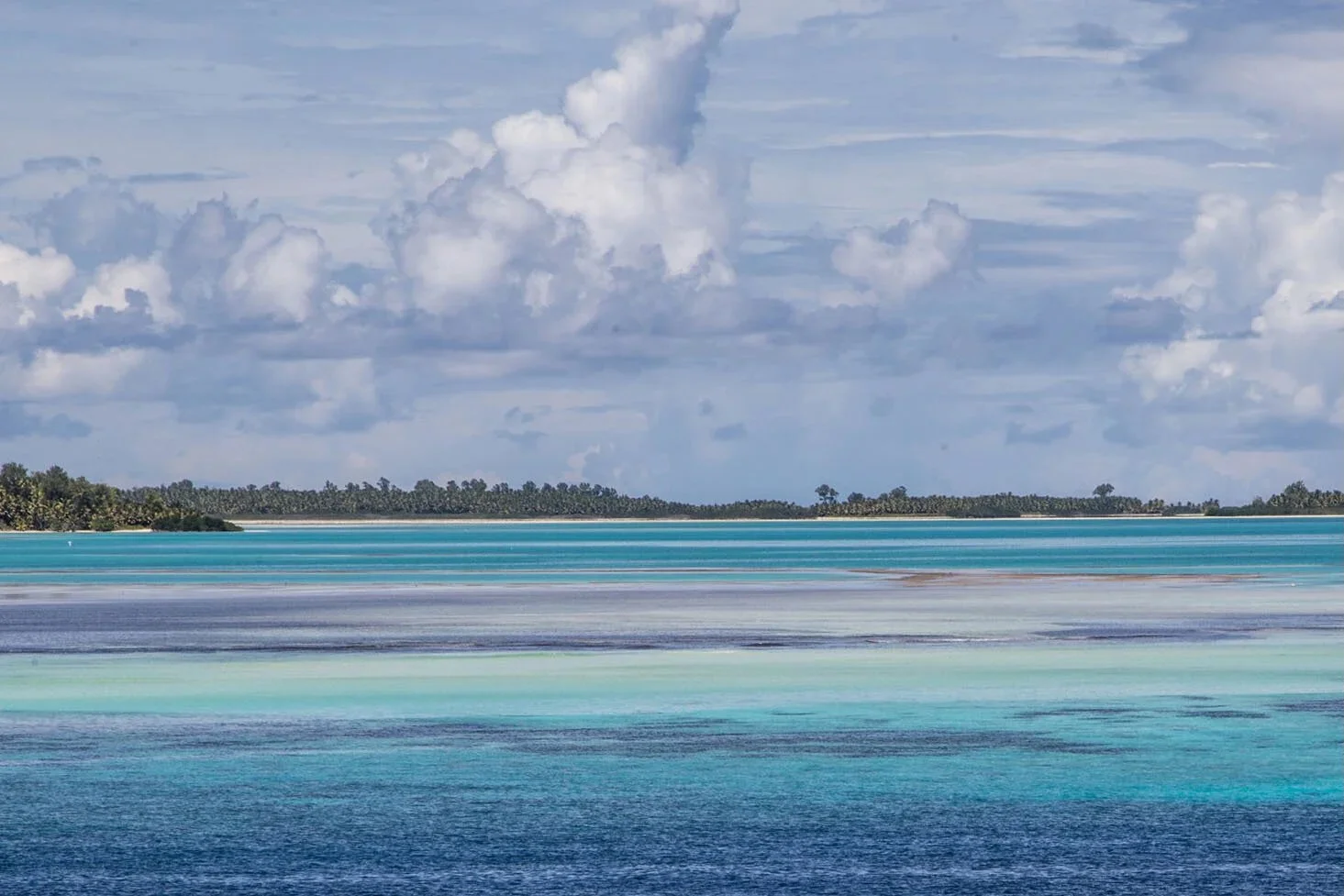
Seychelles Aldabra island

Endless hues of blue off Aldabra, Seychelles

Like South Georgia, Aldabra is uninhabited by humans with the exception of a few researchers from the Seychelles Island Foundation, formed to protect the local habitat. It is one of the only places in the world where you will encounter the giant tortoise, wandering alongside colourful coconut crabs and an underwater world teaming with life, largely unbothered by human interference. Impossibly long stretches of white sand disappear into aqua-hued shallow waters stretching into the horizon. If there is a heaven on Earth, this is it.  

If you like Aldabra, you’ll also enjoy Millenium Atoll (Kiribati) and Socotra (Yemen).


1. Ikaria, Greece

Named after Icarus, who flew too close to the sun, Ikaria is rugged, mystical, and fiercely independent. I first came to study Greek at the island’s cultural center, then returned again and again to explore its mountain trails, thermal springs, secluded beaches, and villages where time seems to run slower. Its famous honey, wine, and olive oil are some of the best in Greece. At just 99 square miles (255 km²), Ikaria feels both intimate and endlessly explorable.

Ikaria, named after Icarus, who flew too close to the sun, is wild, rugged, fiercely self-sufficient, and breathtakingly beautiful. I’ve travelled there more times than I can count, first to study Greek at the Ikarian Cultural Center, and later to explore more of the island’s diverse topography - stunning mountain hikes, hot sulfur pools, and sandy beaches - all backed by rich local products, from olive oil to honey to wine. Ikaria is just 99 square miles (roughly 255km), and yet each time I visit, I discover even more to explore. 
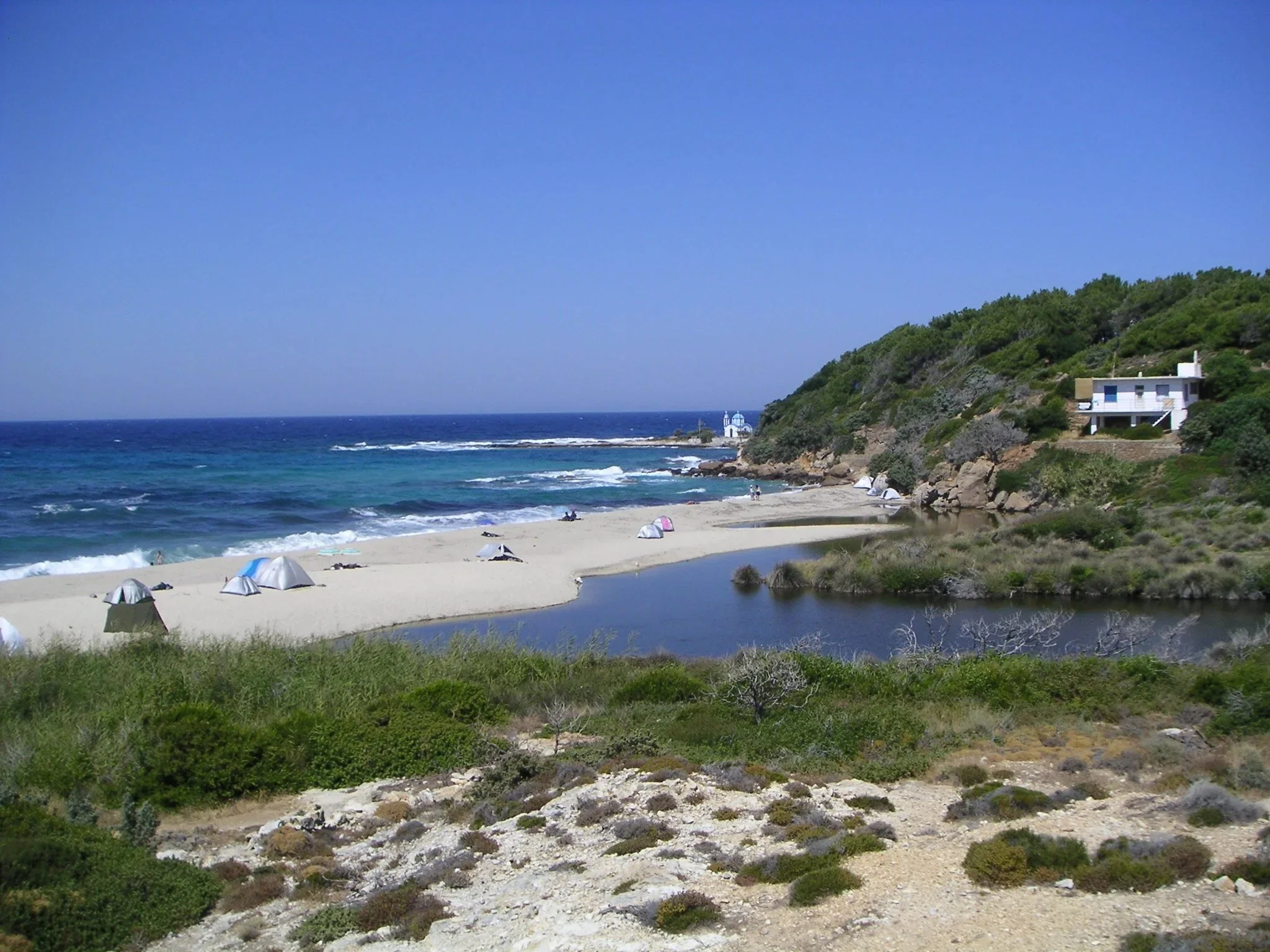
Greece Ikaria island beach

If you like Ikaria, you’ll also enjoy Sardinia and Miyakojima.

For more inspiration, check out my previous post on the Top 7 Beaches in the World.

Greenland: among the giants

Greenland always loomed large on the maps I spent hours poring over during my childhood. This is partly due to its actual size (it’s the largest island in the world) and partly due to land mass closer to the poles appearing more vertically stretched on common map projections. One of the first fun facts I learned about Greenland is that the Vikings named it so to entice more settlers. In reality, the vast majority of Greenland (80%) is covered by an ice cap, and its 55,000 inhabitants live predominantly along its western coast. While Greenland is geographically part of North America, it is politically part of Denmark (and autonomous in a number of ways). 

Kangerlussuaq airport, Greenland

Kangerlussuaq airport, Greenland

Getting to Greenland requires some time and dedication, as the best way to reach it is via a nearly 5 hour flight from Copenhagen to Kangerlussuaq, a small town of about 500 inhabitants and the only airport in Greenland able to handle larger aircraft (originally built as a military base during World War II). Kangerlussuaq is a good jumping off point for visiting the polar ice cap (as a day trip, or more commonly an overnight camping trip), or for internal flights within Greenland. Note that the weather is notoriously fickle; delays and cancellations are not uncommon, so plan accordingly. Upon landing, I took a short flight to Ilulissat, a town further north on the western coast. There are no roads between towns in Greenland—just airplanes, boats, dog sleds, and snowmobiles. I booked all my flights directly (including the roundtrip from Copenhagen) via Air Greenland.

Colorful buildings, Ilulissat, Greenland

Colourful buildings in the town of Ilulissat

Street in Ilulissat, Greenland

Walking around Ilulissat

While Ilulissat is the third largest town in Greenland, its population is 4,600, so you’ll need to plan ahead for your accommodation and transport. You can visit any time of year, but the summer months, during which the sun never fully sets, tend to be most popular (conversely, during winter there is little daylight). The town itself is a colorful sprawl of houses and buildings made to withstand the harsh winters, with the color of the building indicating its use (yellow for doctors and hospitals, red for teachers and churches, blue for fishermen and fish factories, etc.). After settling into my centrally located Airbnb, I went for a walk through town, finding my way to one of the western viewpoints over the bay. I enjoyed lunch at Cafe Iluliaq, which offers a range of different meals, with both locals and tourists seated outside to enjoy the summer sunshine. For dinner, Inuit Cafe offers perhaps some of the best food in Ilulissat, including a range of local specialties. You’ll also find a couple of supermarkets with a decent array of products, though keep in mind that Greenland imports almost everything except for fish, so prices are high and selection is limited. Note that everything closes quite early, even in summer (unless you happen to be invited to one of the local all-night parties). 

Iceberg in Disko Bay, Greenland

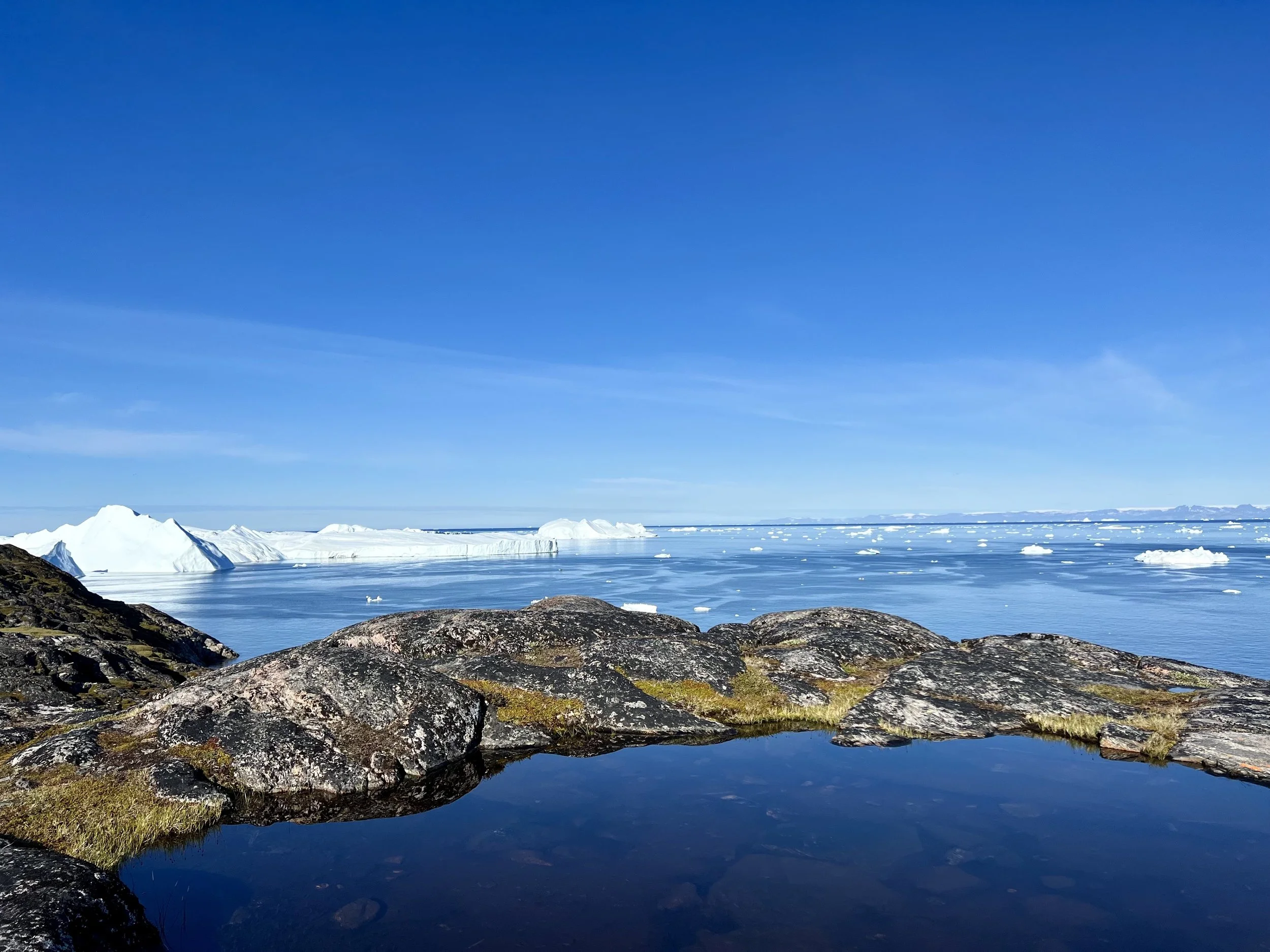
Icebergs in Disko Bay

Midnight sun over icebergs, Disko Bay, Greenland

Midnight colours in Disko Bay

That evening, I embarked on a previously booked icefjord boat tour, which turned out to be one of the highlights of the trip. The tours typically depart around 10pm to take advantage of the summer midnight sun. We glided among sunset-tinted icebergs, spotting numerous humpback whales putting on quite the display, flukes playfully raised and blowholes spouting above the sea. The sunset went on for hours after our return, soon turning into a bright dawn. 

The next day, I embarked on a kayaking excursion with Ilulissat Adventures around Disko Bay. They provide all the gear, including a drysuit—bring some warm wool layers to wear underneath. In general, layers are key to Greenland, as the average summer temperature in Greenland is about 10C (50F) and can fluctuate significantly. While some days were so warm I could wear a t-shirt, others necessitated protective layers against pelting rain and winds so strong I could barely breathe.  

Kayaking in Disko Bay, Greenland

Kayaking in Disko Bay

It felt truly spectacular to be on the water in close proximity to giant icebergs, and a good reminder of how small we are in the larger view. In a similar vein, the spectacular Ilulissat Isfjordscenter (a short walk from the town center), newly constructed and opened in 2021, is also worth a visit. Its unique architecture and informative exhibits are sure to occupy the better part of a couple of hours, and it’s also the start of a couple of short trails to reach the ice cap, a UNESCO World heritage site. Perhaps my favourite part of the whole trip, the Ilulissat Icefjord is at once breathtakingly beautiful, awe-inspiring, and humbling; it will leave you questioning humanity’s role and place on this planet. 

Ice cap, Ilulissat, Greenland

Walking from Ilulissat Isfjordscenter to the icefjord

The views and sounds are stunning: this giant, slow-moving glacier, witness to thousands of centuries past, passes slowly before you, iceberg-sized chunks breaking off and echoing, cracking and heaving, into the abyss. It’s at once both larger than life and disappearing before our very eyes: in recent years, the ice sheet has been melting at record levels. Second in size only to Antarctica, Greenland’s ice sheet contains 12% of the world’s glacier ice. Its melting is predicted to result in significant sea level rises worldwide that will change life as we know it over the next few generations. 

View of icebergs in Disko Bay, Ilulissat, Greenland

View of Disko Bay on a short hike from Ilulissat

A good place to continue philosophizing is always over great local food and wine. Koks is an excellent restaurant typically based in another Danish territory, the Faroe Islands. I had the privilege of dining there during my trip to the Faroe Islands a few years back. While Koks constructs a new home for their restaurant in the Faroes, they have established a summer residency in Ilimanaq, Greenland, accessible from Ilulissat via a 90 minute boat ride through even more icebergs. Reservations are recommended well in advance, and you’ll book the boat transfer separately through World of Greenland. Koks in Greenland does not disappoint, focusing on showcasing the best of what the area has to offer in ways that are both delicious and surprising. Afterwards, enjoy a magical sunset-hued ride back to Ilulissat at the end of the evening. 

Dinner at Koks Restaurant, Ilimanaq, Greenland

A dish with wine pairing at Koks in Ilimanaq

Ilimanaq, Greenland

The town of Ilimanaq, a 90 minute boat ride from Ilulissat

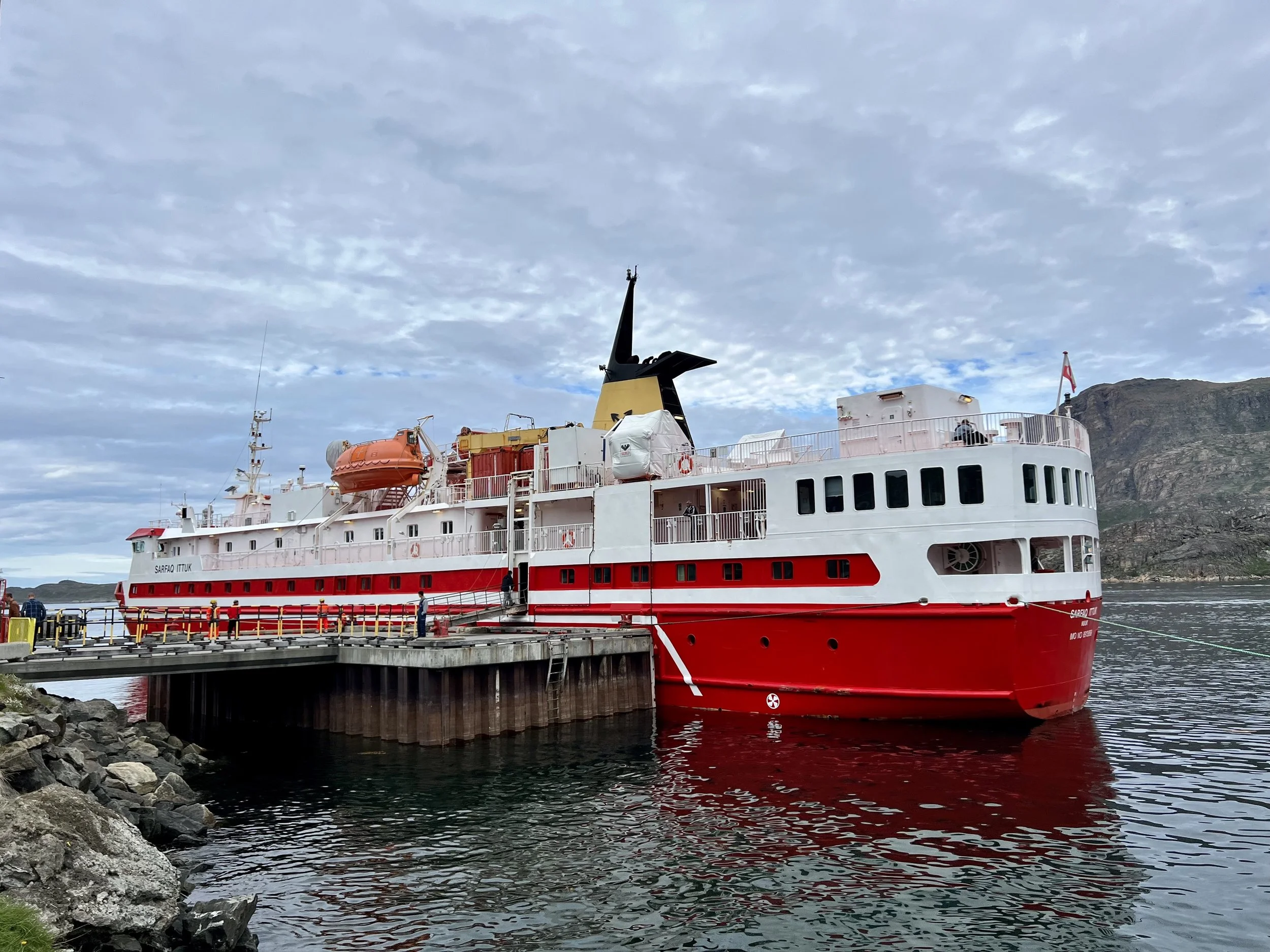
After a few nights in Ilulissat, I caught the local Arctic Umiaq ferry that takes both locals and tourists up and down Greenland’s western coast. I booked a cabin for the 36 hour journey down to Nuuk, Greenland’s capital; while expensive, it afforded a calm and private place to sleep and rest during the day. The ferry is a fun experience and special way to see Greenland, including some tiny coastal villages (some stops along the way required us to launch a dinghy to pick up the passengers and bring them aboard). It’s a basic ship with relatively simple food options (bring snacks and whatever else you might like aboard, including books, games, etc.). It’s typically too windy to be outside for more than a few minutes at a time, though you can disembark at some of the larger ports en route (notably Sisimiut, which was a nice place to stretch my legs and walk around for a couple of hours)—check first on the departure time before disembarking. 

Arctic Umiaq ferry, Greenland

The Arctic Umiaq ferry

Kangaamiut, Greenland

The town of Kangaamiut seen from the ferry

Nuuk is worth a night or two to get a sense of life in Greenland’s capital and largest town, though it is decidedly less charming than Ilulissat. During my stay, the winds were too strong for most outdoor activities, and the standup paddleboard tour I’d booked was cancelled. This is not uncommon in Greenland, and travelling here during any time of year requires an open mind and flexibility. My flight from Nuuk back to Kangerlussuaq was repeatedly delayed and then cancelled due to the high winds, and I eventually arrived on another flight later that evening once the winds had temporarily relented. As it was after 6pm, nothing was open in Kangerlussuaq (no grocery stores, restaurants, etc., of which there are just a couple to begin with), so be sure to have food with you. I was personally saved by my Airbnb host’s instant ramen supply, for which I am eternally grateful. Kangerlussuaq is largely skippable except as a starting point for an ice sheet tour, a worthwhile experience to see a piece of our planet that may not be around for much longer.

Nuuk, Greenland

Downtown Nuuk

Nuuk, Greenland

Downtown Nuuk

Viewpoint in Nuuk, Greenland

Colourful residential buildings in Nuuk

Where to eat and drink

Cafe Iluliaq, Ilulissat

Inuit Cafe, Ilulissat

Koks, Ilimanaq

Killut Cafe, Nuuk

Daddy’s, Nuuk

Godthåb Bryghus, Nuuk

Sarfalik, Nuuk

Restaurant Charoen Porn, Nuuk

Kristinemut, Nuuk

Where to stay

Airbnb in central Ilulissat

Arctic Umiaq ferry (between Ilulissat and Nuuk)

Airbnb in Nuuk

Falklands, South Georgia, and Antarctica: the Seventh Continent

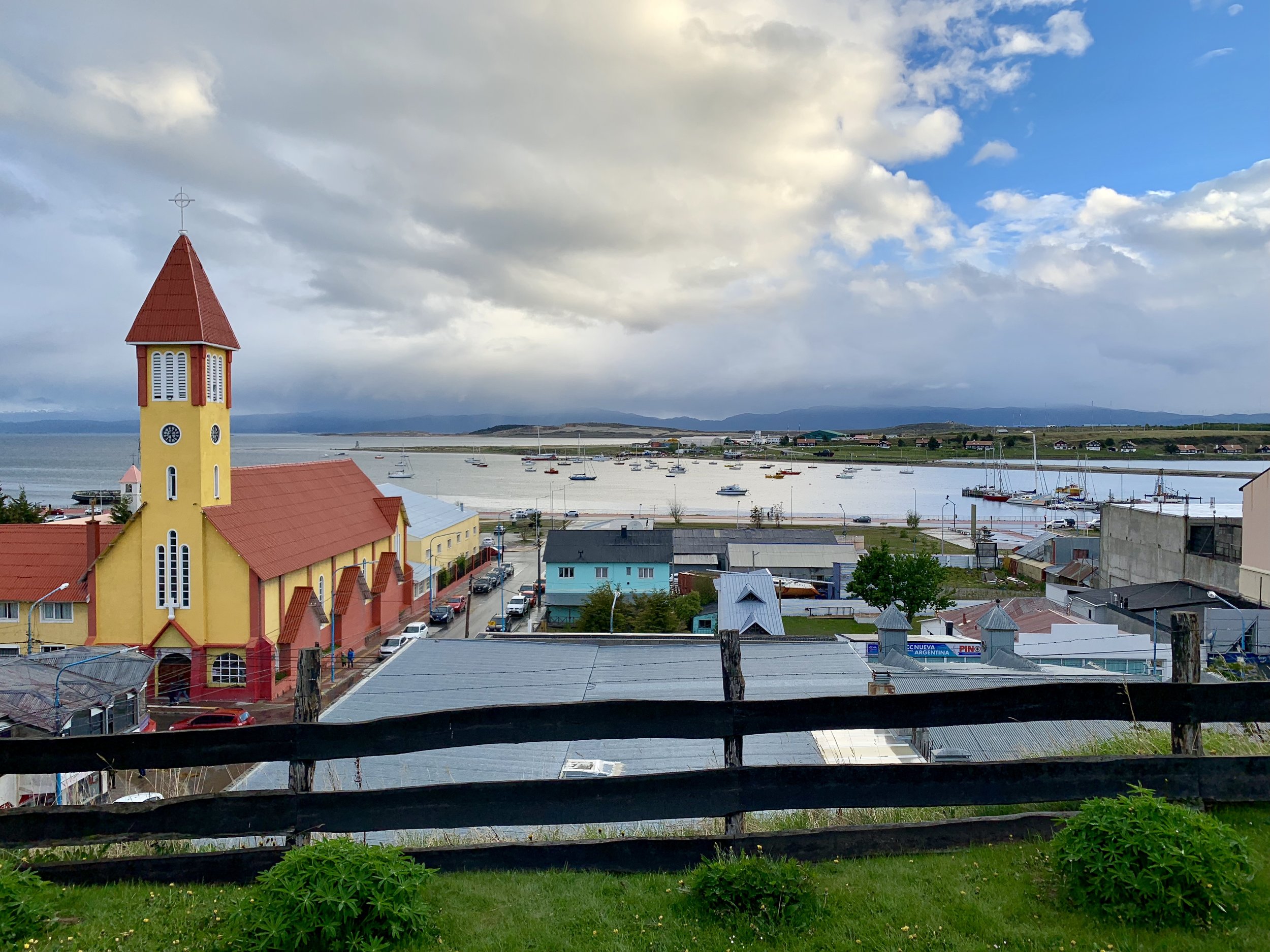
I had dreamed of going to Antarctica for years, and I had heard from fellow travellers that the highlight of their experience was often South Georgia. So earlier this year, I blocked off nearly 3 weeks on my calendar and made the dream a reality last month, travelling to the Falklands and South Georgia en route to Antarctica. We flew into Ushuaia in Argentina, spending a couple of nights there before meeting our ship at the port. It’s important to choose your ship wisely—don’t go for a cheap one, as you truly do get what you pay for. On the higher end, smaller ships will offer more flexibility and enable you to spend more time on land. I would personally recommend travelling on the National Geographic Orion via Lindblad Expeditions—it’s a beautiful ship and a first class experience.

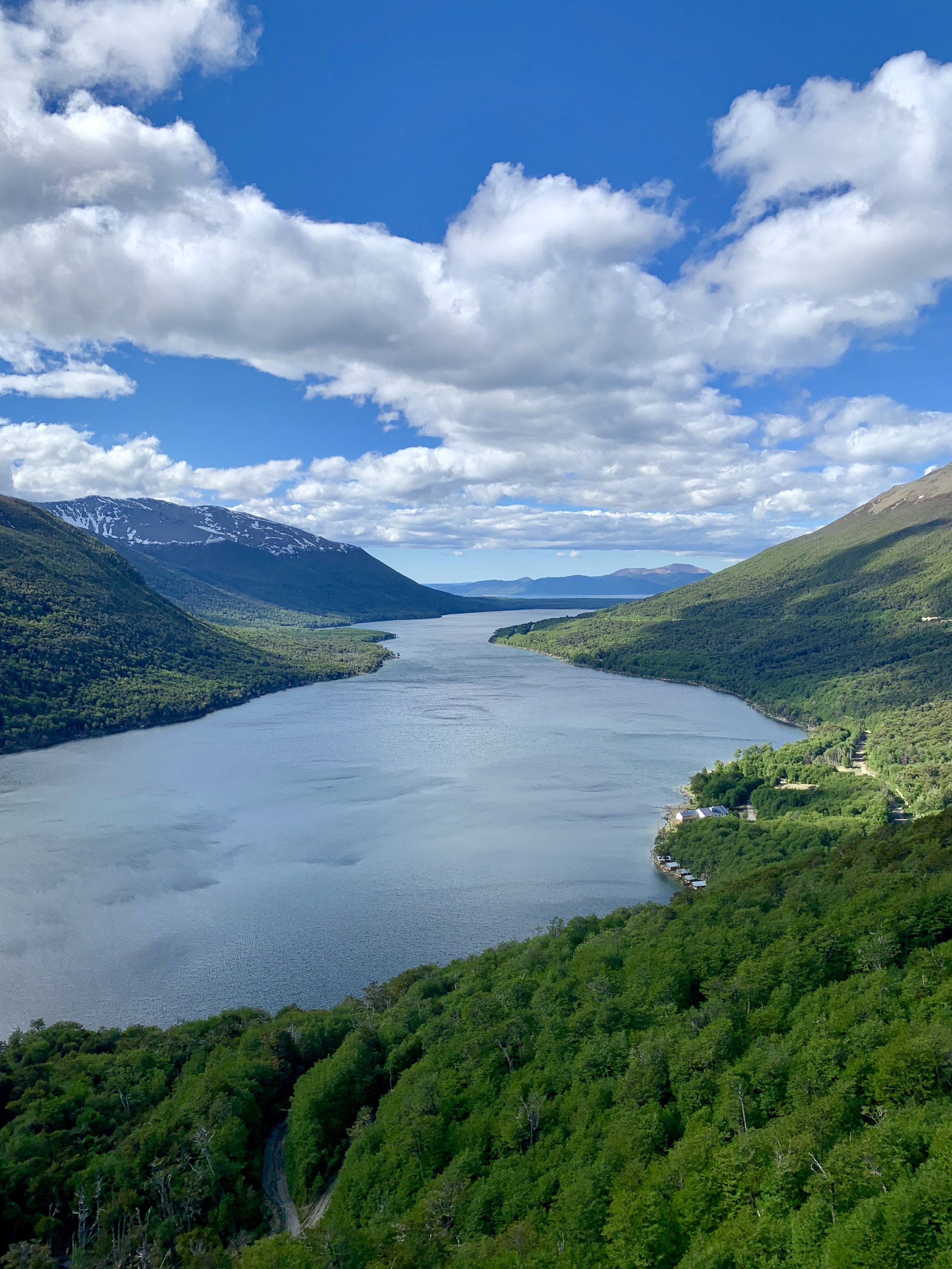
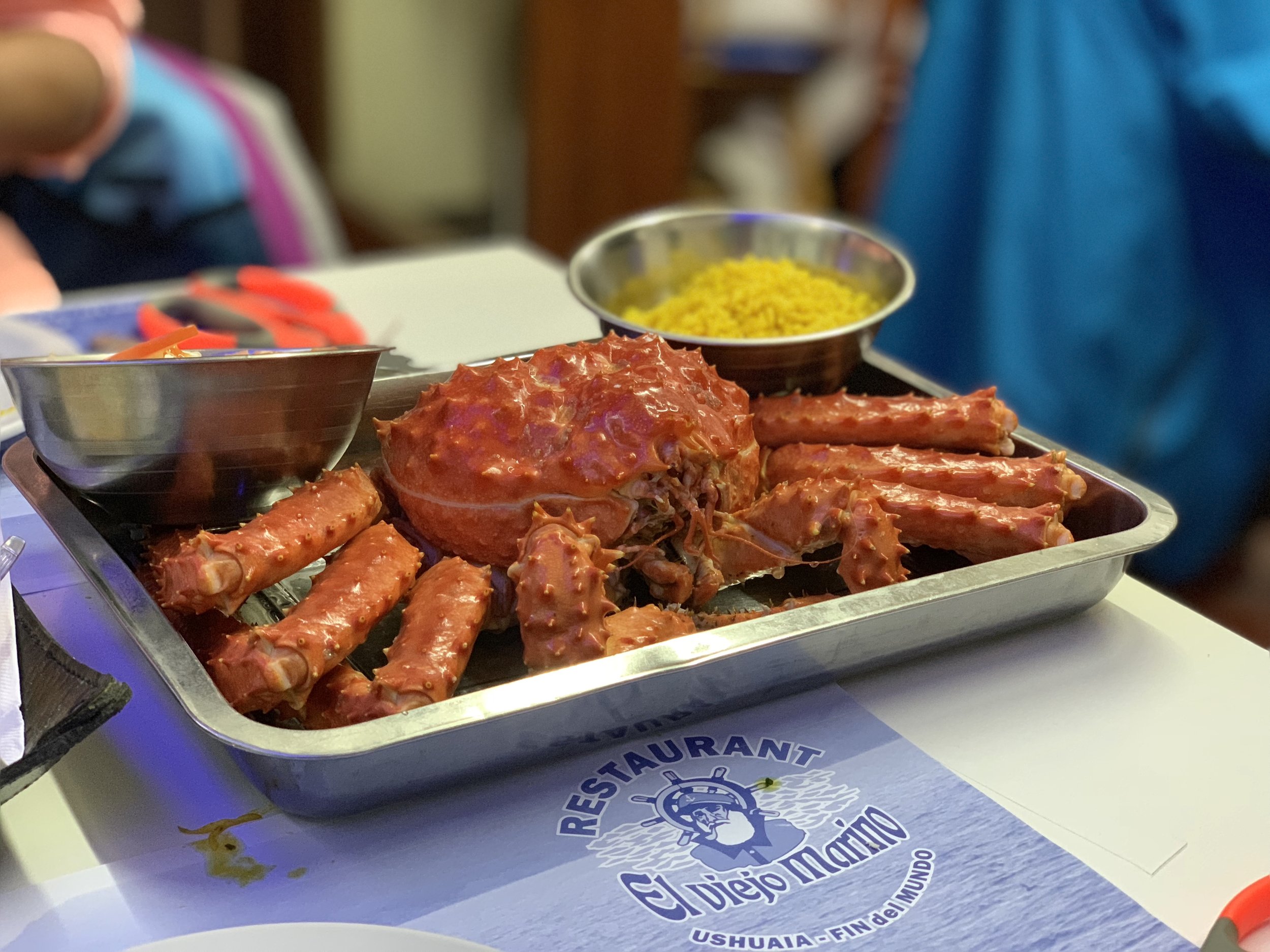
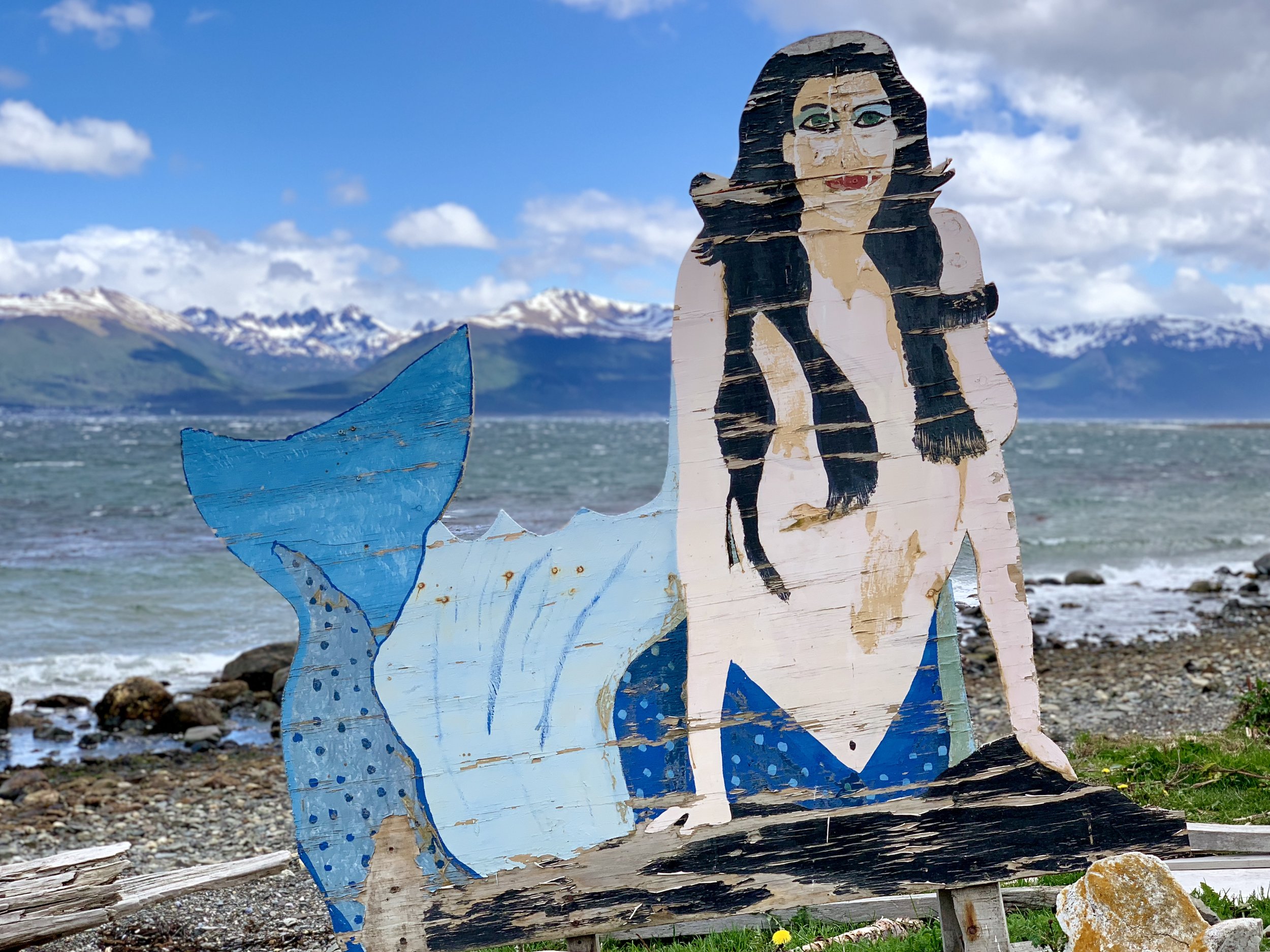
In Ushuaia, don’t miss the centolla (local king crab) at El Viejo Marino - it was so delicious, we went twice for the whole crab experience. You can also order just the crab meat if you’re in a hurry. Also recommended for a high end experience is Kaupe, with views overlooking the city and harbour. For breakfast or a snack with reliable free wifi, check out Tante Sara on the main street in town. If you have at least a full day, I recommend renting a car to check out the beautiful surrounds. Tierra del Fuego National Park was pleasant enough, but much more spectacular was the road east of Ushuaia. We stopped for lunch at La Sirena y El Capitan (cash only) in Puerto Almanza, where the scallops and crab empanadas were some of the best we’ve had. The setting, overlooking the Beagle Channel, with Chile in the distance, is equally spectacular. We drove onwards through the mountains to vistas of Lago Escondido and the enormous Lago Fagnano before heading back to Ushuaia. If you have more time, the shipwreck of the Desdemona, which ran aground in Cabo San Pablo, is worth a visit.

After setting sail from Ushuaia the following afternoon, we had over a day at sea before reaching our first destination, Carcass Island in the Falklands. Known for its population of Magellanic and gentoo penguins, the island features several beautiful yellow sand beaches reaching into light green-blue waters. After sitting on the beach watching the penguins diving in and out of the water, we hiked up to to the island’s highest point for a spectacular view of the surrounding islands and our ship in the distance. From Carcass Island, we sailed to West Point Island, inhabited by a couple who are the island’s caretakers and serve pastries and tea to visitors in their lush garden. The island is also home to several thousand breeding pairs of rockhopper penguins and light-mantled albatrosses. To reach them, we hiked across and the island and through some 2-metre high clumps of tussock grass. We were rewarded by seeing the birds sitting on their eggs, with albatrosses frequently swooping just inches above our heads.

A rockhopper penguin guarding its egg, Falkland Islands

A rockhopper penguin guarding its egg, Falkland Islands

Following two more days at sea (bring your dramamine!), we passed Shag Rocks, a towering, craggy set of formations that is home to thousands of shags (cormorants) before finally reaching South Georgia, perhaps one of the most beautiful places on earth. Our first stop was Salisbury Plain, home to the island’s second largest king penguin colony, with over 500,000 individuals. Baby penguins covered in fluffy brown down mixed together with brightly hued yellow, white and black adults. They approached us curiously but cautiously, making for an unforgettable experience. Fur seals and elephant seals rounded out any available empty space, and the black sand beach made for a memorable backdrop.

A penguin among penguins in Salisbury Plain

A penguin among penguins in Salisbury Plain

We also visited the main settlement on South Georgia, Grytviken, which was formerly a whaling station. Remnants of the station (and others like it) litter the South Georgia coast, a sombre memorial to humans’ mass slaughtering of wild animals. Four staff members live here during the high season (November-March), manning the post office and gift shop as ships arrive nearly daily with visitors. Ernest Shackleton’s grave is also found here, and we drank a shot of whiskey in his honour.

King penguins, St Andrew’s Bay

King penguins, St Andrew’s Bay

The biggest highlight of South Georgia, however, was St Andrew’s Bay, which we visited on our third day on the island. It is home to the island’s largest king penguin colony, and the view over the raucous, colourful colony is one I will never forget. Penguins in all stages of life—babies, those moulting, and adults—abound against the stunning backdrop of glacier-covered mountains, small ponds and rocky beach. We were also rewarded with a spectacular display of lenticular clouds as we motored away towards the southern stretches of South Georgia. We stopped briefly at Cooper Bay to see macaroni and chinstrap penguins, followed by a cruise of the stunning Drygalski fjord.

King penguins and lenticular clouds at St Andrew’s Bay

King penguins and lenticular clouds at St Andrew’s Bay

Sheer happiness in St Andrew’s Bay

Sheer happiness in St Andrew’s Bay

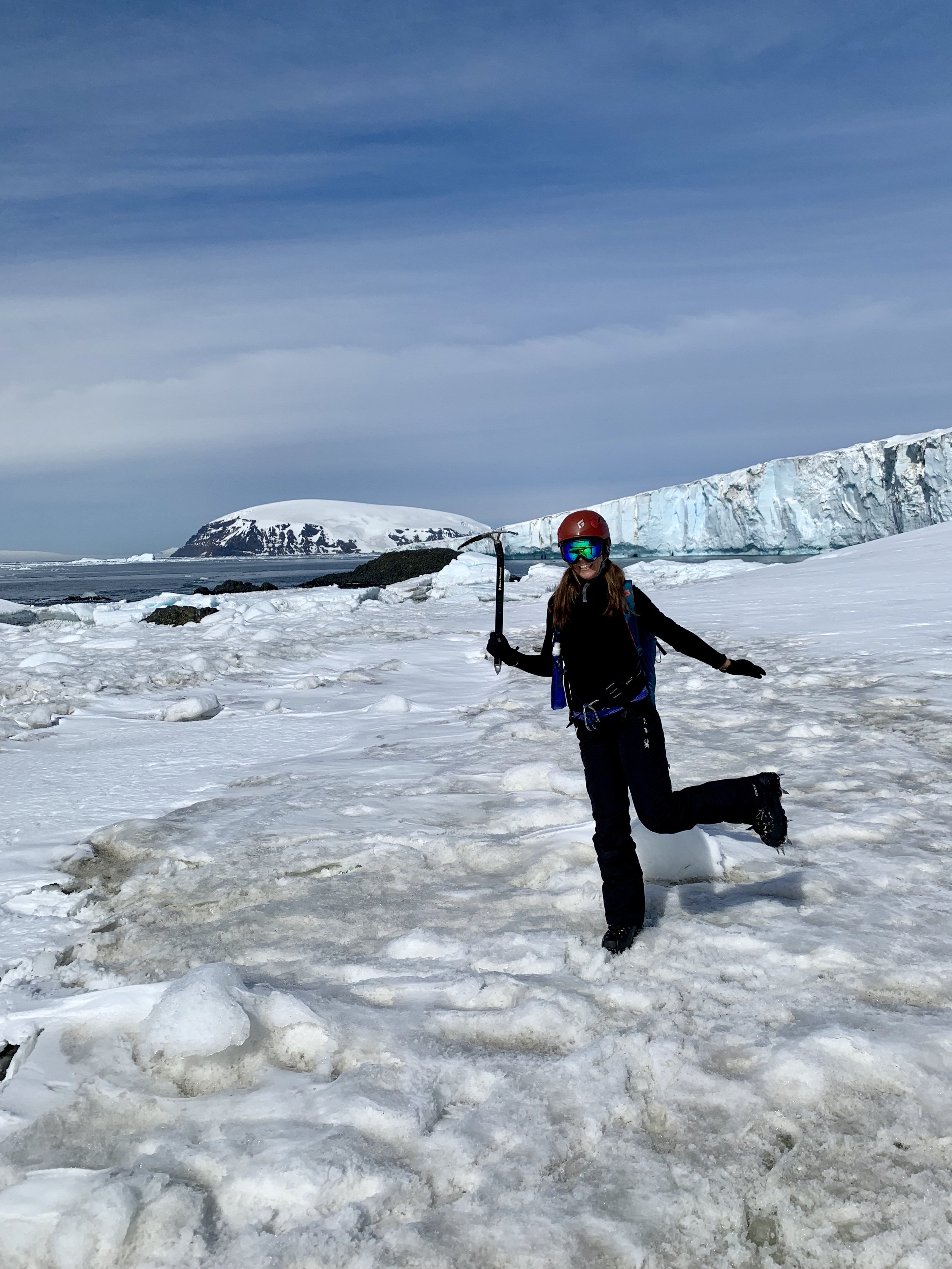
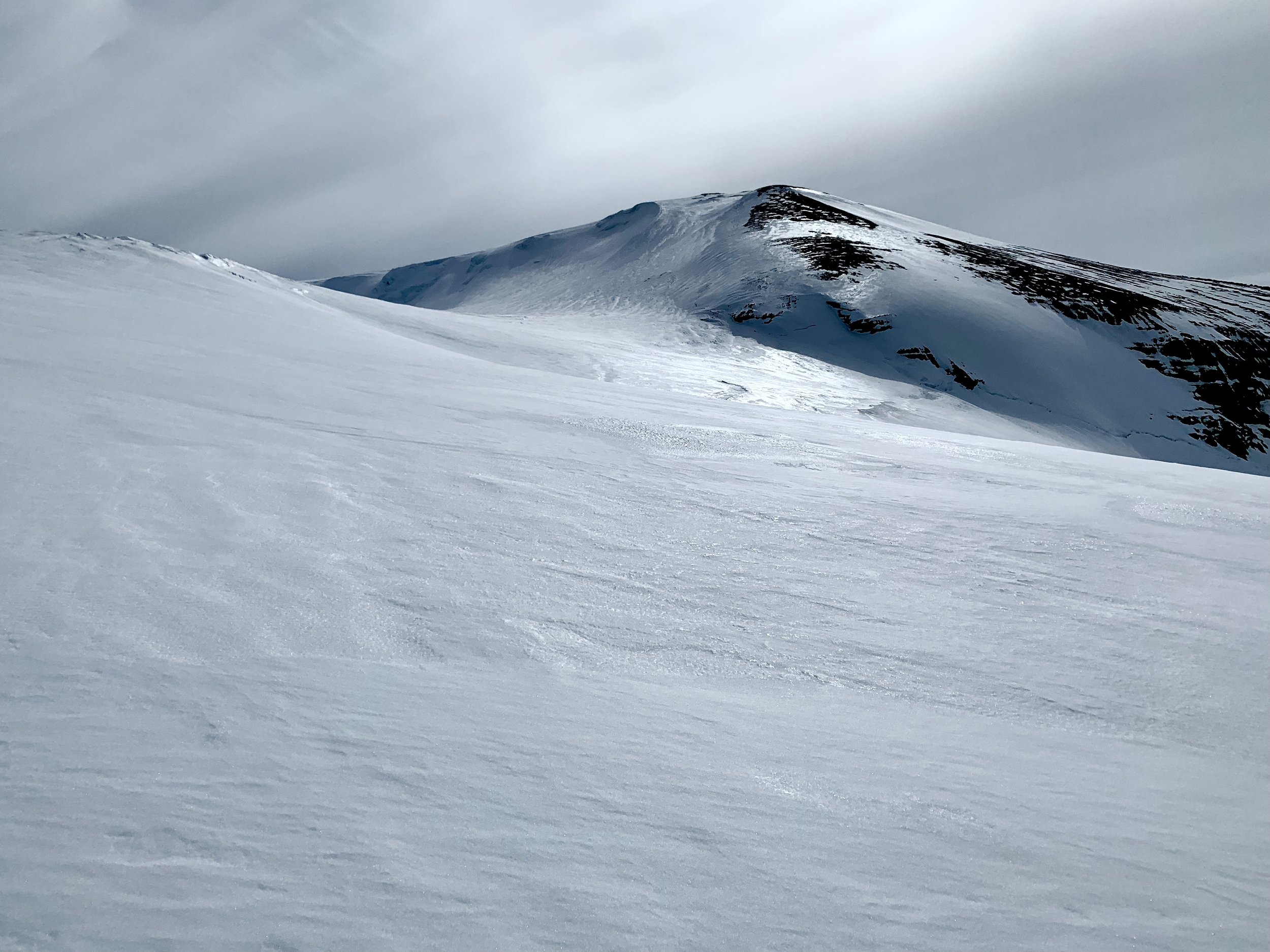
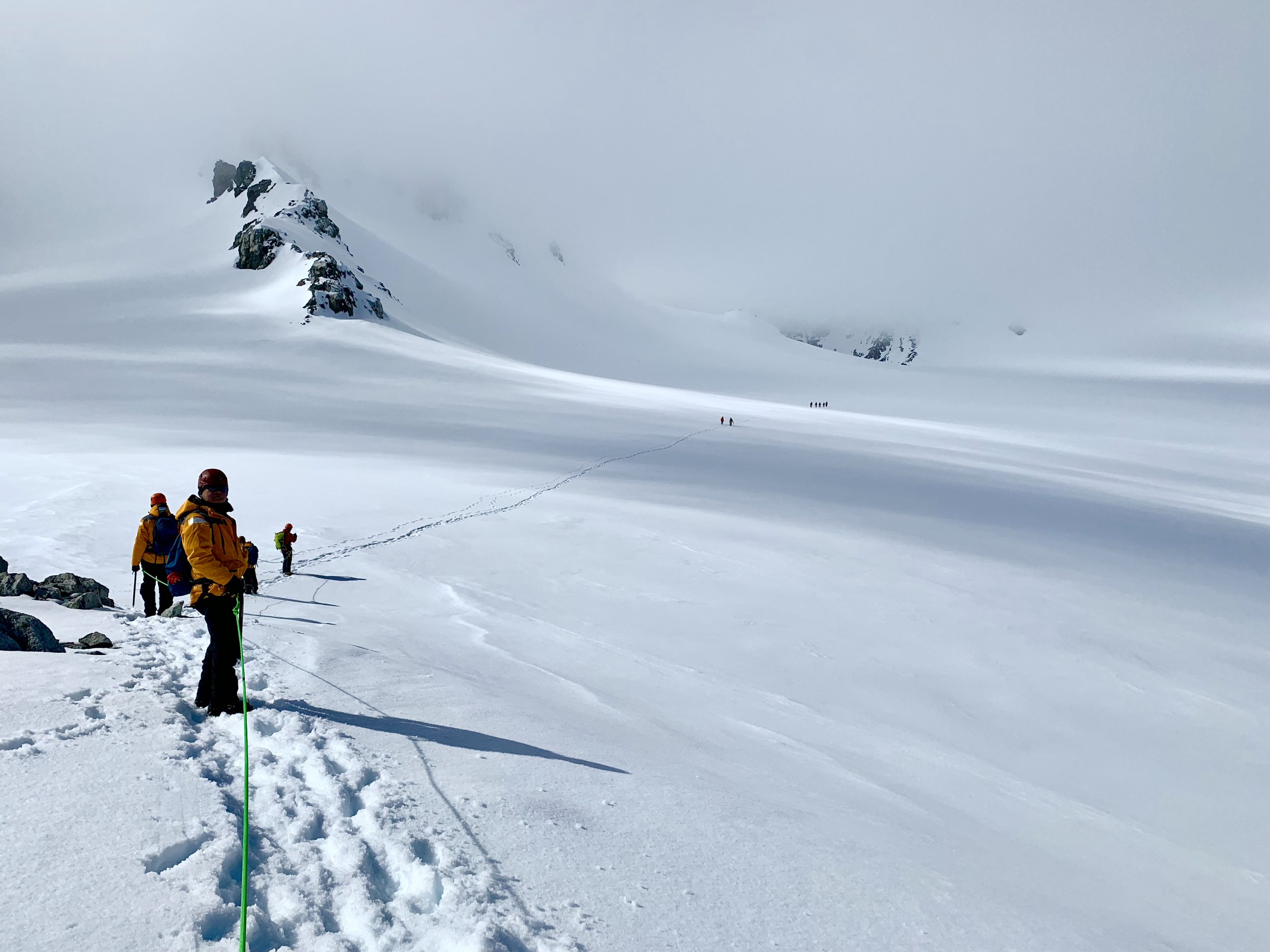
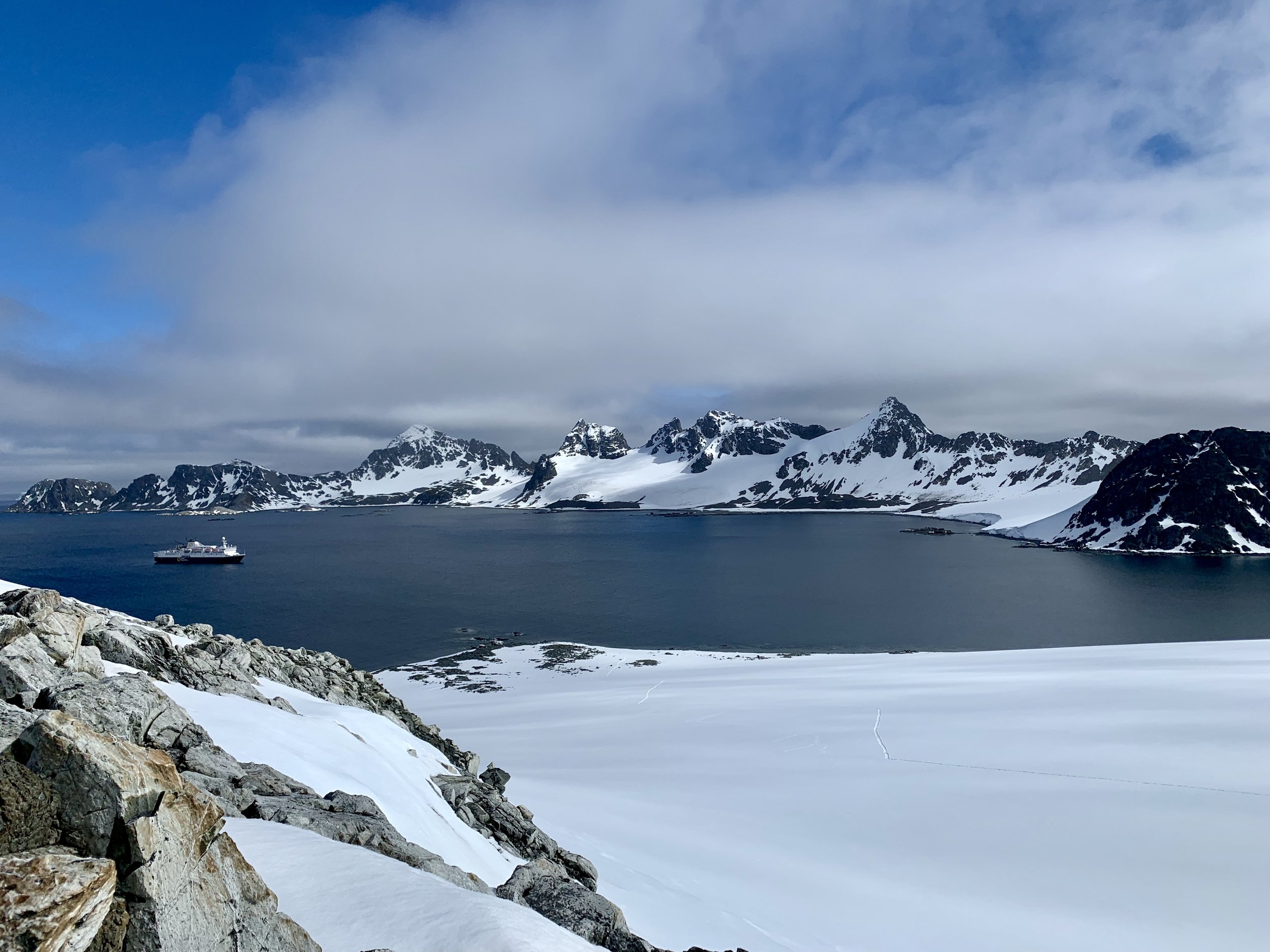
Our first stop in the Antarctic was Laurie Island in the South Orkneys, where a small group of us went mountaineering (complete with ropes and crampons) in fresh powder. We were accompanied by a couple of Argentines from the nearby Orcadas base and learned they live on the base year-round, subsisting on shipments brought in by ship once a year. What do they miss the most? Fresh vegetables!

Brown Bluff, Antarctica

Brown Bluff, Antarctica

A gin & tonic with Antarctic glacial ice

A gin & tonic with Antarctic glacial ice

We made landfall on the Antarctic mainland at Brown Bluff, a stunning set of rocks from which the area gets its name and home to a sizeable colony of Adelie penguins. We again went mountaineering, admiring the views of the icebergs dotted with penguins and bay packed with sea ice. Later, we kayaked through the ice, admiring the quiet that was interrupted only by the sounds of calving glaciers. We collected some of the ice to add to our gin & tonics later on the ship. At Mikkelsen Harbour, as snow and hail pelted us, we visited a colony of gentoo penguins, admiring their strength in the face of the elements. Many of them walked to the end of the island and back to gather rocks for their nests, huddling together as they built up the areas that would house their eggs. At Half Moon Island, we were privileged to witness a colony of chinstrap penguins, oblivious to our existence as we skirted around to allow them to freely pass between us. The surrounding icescape was dotted with rocky pillars, a contrast to the white glacier. We truly felt small.

One afternoon, we were offered the opportunity to do a polar plunge—that’s right, we willingly jumped into 1°C water. It was shockingly cold, and we warmed ourselves with shots of vodka and time in the on-board sauna afterwards. The staff prepared a spectacular Antarctic barbecue on the outer deck, and we bid goodbye to the icey, otherworldly panorama of icebergs, glaciers, frolicking penguins and seals, and deep hues of blue and white as we sailed northwards, back to Ushuaia. It truly felt like the end of the world, and the feeling of setting foot where very few others have is an unforgettable one.

Packing list

  • Sunscreen (the sun is very strong in the Antarctic)

  • Dramamine or other motion sickness medicine

  • Bathing suit

  • Waterproof pants (make sure they are actually waterproof by hosing yourself down before you go)

  • Wool/base layers (layering is key to dressing for the weather, as it changes very rapidly - depending on the day, I wore both t-shirts as as well multiple layers and and outer shell)

  • Comfortable shoes to wear on the ship

  • Hand warmers

  • Two sets of gloves

  • Camera & lenses

  • Extra SD cards (I ended up taking nearly 7k photos)

  • Lotion (the air can get very dry)

  • Books, cards, and games for days at sea

Where to eat & drink

El Viejo Marino

Kaupe

Tante Sara

La Sirena y El Capitan