Top

Haiti: escape into the past

I knew I would be met with more confused looks than usual when I told friends I was heading to Haiti, and I didn’t want my Mom to worry about the political situation, so I didn’t speak of the trip much at all until I was back. It was only four days, a quick getaway thanks to direct flights from NYC on Jetblue, and yet it felt like I’d been gone for well over a week. Haiti is so full of sensory experience that you feel overwhelmed until you’ve settled into the local rhythm. 

A view of Port-au-Prince from above

A view of Port-au-Prince from above

Haiti’s mountainous interior further complicates driving in the country

Haiti’s mountainous interior further complicates driving in the country

Upon landing in Port-au-Prince, we headed to the rental car counter to pick up our car and meet our driver. I had a brief, in retrospect completely delusional, idea of driving in Haiti, but my research indicated this was a bad idea, and I’m glad reason prevailed. I’d driven in the Dominican Republic earlier this year, and that was a walk in the park compared to the roads in Haiti. The traffic jams in Port-au-Prince are some of the worst I’ve ever seen anywhere in the world, with complete chaos reigning as hundreds of cars attempted to go in multiple different directions. Tall piles of trash littered the streets, locals weaved between the cars selling snacks and drinks, and if not for the lack of animals wandering the streets, I might have thought I was in India. 

Port-au-Prince, Haiti

Port-au-Prince, Haiti

But if travel to Haiti is considered more difficult relative to other countries, the reward is all the more compelling: we encountered nearly empty white sand beaches, spectacular if humid hiking, and friendly locals whose pace of life reminded us to slow down and appreciate each moment. There is also a small expat population, largely consisting of aid workers and artists, and these were pretty much the only other foreigners we encountered. 

Île-à-Vache

Île-à-Vache

Once we left the traffic of Port-au-Prince, the main (and only) road south took us through numerous villages and small towns vibrant with life. After a total of seven hours, we reached Les Cayes, where a small boat awaited us for the crossing to our first destination, Île-à-Vache. Our small wooden hull was no match for the large waves that battered us from the south, and after an hour we reached the island completely soaked to the bone, laughing at the situation. We were met by three of the employees of Suites la Colline, who took us up the hill to the cool respite of the hotel. Run by a French Canadian, Lambert Farand, Suites la Colline incorporates local art with a modern, tiered construction that gives the feeling of a true escape. A short hike up from the hotel provides spectacular views of the beach and Abaka Bay resort below (where mounted photos show a visit by former U.S. president Bill Clinton), while a short hike down leads to the village of Cacor, where we spent an evening listening to locals playing voodoo music while dancing and drinking the local rum, pulling in passing villagers one by one until the party was 100 strong. 

The view from just above Suites la Colline, Île-à-Vache, Haiti

The view from just above Suites la Colline, Île-à-Vache, Haiti

Over drinks on the hotel terrace, Lambert told us that we were one of only three visits he has had from actual tourists in the ten years he has been running the hotel. The remainder have been from aid workers or Haitians living abroad returning on vacation. So if you’re looking for under the radar, and have a sense of adventure when inevitably things don’t go as planned (it took us 3 tries to find an ATM that was in working order, and time in general runs fluidly), Haiti is it.

Ile des Amoureux, Haiti

Ile des Amoureux, Haiti

From Suites la Colline, you can hike to completely deserted beaches, untouched by humans, and have the place all to yourself. One afternoon at Île-à-Vache we asked locals to take us on a boat ride around the island, and we stopped off at a stunning islet of sand, known as Île des Amoureux, where we swam while our boat driver went to purchase a lunch of freshly grilled fish, conch (“lambi”) and local beers. Our enjoyment turned to concern when our boat did not return after one hour, then two hours...until we finally saw it appear on the horizon. It’s generally advisable not to assume anything in Haiti, and to set clear expectations. Lambert recounted a multitude of stories about the construction of Suites la Colline and the importance of hiring strong local overseers and being fully present to have any hope of completing the project. 

Near Jacmel

Near Jacmel

Street art in Jacmel

Street art in Jacmel

After returning to Les Cayes from Île-à-Vache, we continued on to Jacmel, known as Haiti’s cultural hub. We walked the colonial streets and met a couple of local artists before heading to our Airbnb about 30 minutes east of the city by car. Run by Janet, a Canadian who spent her career in developing countries in Africa before making her way to Haiti to serve as the country’s director of Save the Children, the standalone apartments are a short walk from an amazing outdoor shower and the main residence, an open air construction stylishly decorated with acquisitions from Janet’s travels. There are swinging beds and spots for relaxation galore, as well as a small plunge pool surrounded by tropical greenery. It’s a truly peaceful place, the kind of haven to which one might imagine retreating to work on a novel or other creative endeavour. Needless to say, we did not want to leave. 

Janet’s Chic Chateau, near Jacmel

Janet’s Chic Chateau, near Jacmel

Packing list

  • Sun protection and hat (it gets quite hot, and the sun is very strong)

  • Bathing suit

  • Hiking shoes

  • Mosquito repellent

Where to stay

Suites la Colline

Janet’s Chic Chateau Airbnb near Jacmel (room 1, room 2)

City escapes: Block Island, RI

A few hours away from NYC, a train and ferry ride away, lies the hiply cute Block Island. With its Victorian houses and large expanses of green sloping into sand dunes and stretches of beach, Block Island feels somewhat like a hideaway for New England’s elite. But its serene exterior belies its down to earth, casual vibe that makes it so easy to love.

Frederick Benson Town beach, Block Island

Frederick Benson Town beach, Block Island

Several ferry routes service Block Island: New London, CT (easiest for those coming from NYC), Montauk, NY, Fall River, MA, Newport, RI and Point Judith, RI (easiest for those coming from Boston). You can also fly in from Westerly, RI on New England Airlines. Amtrak runs frequent train service to New London, CT, from which the ferry is a 5 min walk. Otherwise, you can take a train to the nearest Amtrak and request an Uber or Lyft to the ferry or airport.

The beach in front of Avonlea by the Sea

The beach in front of Avonlea by the Sea

The beach in front of Avonlea by the Sea

The beach in front of Avonlea by the Sea

Book a B&B or hotel within walking distance of New Shoreham, Block Island’s main port town, so that you have no need for a car or taxi upon arrival. Instead, rent a bike from Aldo’s Bikes & Mopeds or Island Moped & Bike. At just six miles between its northernmost and southernmost tips, Block Island is the perfect place to leave your car behind and bike, rollerblade or walk. We stayed at the charming Avonlea by the Sea, which includes a home-cooked breakfast by the resident Sabrina, as well as wine and snacks every afternoon, including Block Island barnacle cookies. After settling in, we headed to Ballard’s for drinks directly on the beach. The food is skippable—for better food options, take a short stroll to the The 1661 Inn (which also features a curious animal farm that you can visit) or the Spring House Hotel (both also higher end options to stay at night). Seafood is the local specialty on the island, with oysters, shrimp and haddock typically a good bet. Afterwards, we danced to the live band playing covers at Captain Nick’s, perhaps the liveliest watering hole on the island. Next door is also the reliable Poor People’s Pub with plenty of outdoor seating.

By day, we followed Spring St. down to the South East lighthouse, built in 1874 and moved to its current location in 1993 due to erosion. Designated a U.S. National Historic Landmark, it’s a quick stop en route to the striking Mohegan Bluffs, set below several staircases from the main road. From here, we continued along the Mohegan Trail, which curves northward towards the airport. Should you arrive or depart by plane, the lively Bethany’s Airport Diner is a great spot to linger over a drink as you watch small planes take off.

Mohegan Bluffs

Mohegan Bluffs

Further north lies Legion Park, where we sampled delicious fresh unsweetened lemonade and snacks from local vendors at the weekly Saturday’s farmers market. Dead Eye Dick’s was perfect for a sunny lunch outside: the local oysters and bloody mary were a great combination, and they serve two delicious varieties of clam chowder. Should you desire a nap on the beach after lunch, nearby crescent-shaped Frederick Benson Town Beach is the place to be. For fewer crowds, we rode further up to Mansion Beach, bordered by untamed sand dunes and tidal pools. Bring your own drinks and snacks, as there are no facilities.

Mansion beach

Mansion beach

The Block Island North Lighthouse, accessible via a pebbly beach path, marks the northernmost point of the island. The winds here are stronger, so be sure to keep energy in reserve for the ride back to New Shoreham. For those who are meditation minded, the Sacred Labyrinth is a serene stop en route—it was completely empty when we stopped by.

The Sacred Labyrinth

The Sacred Labyrinth

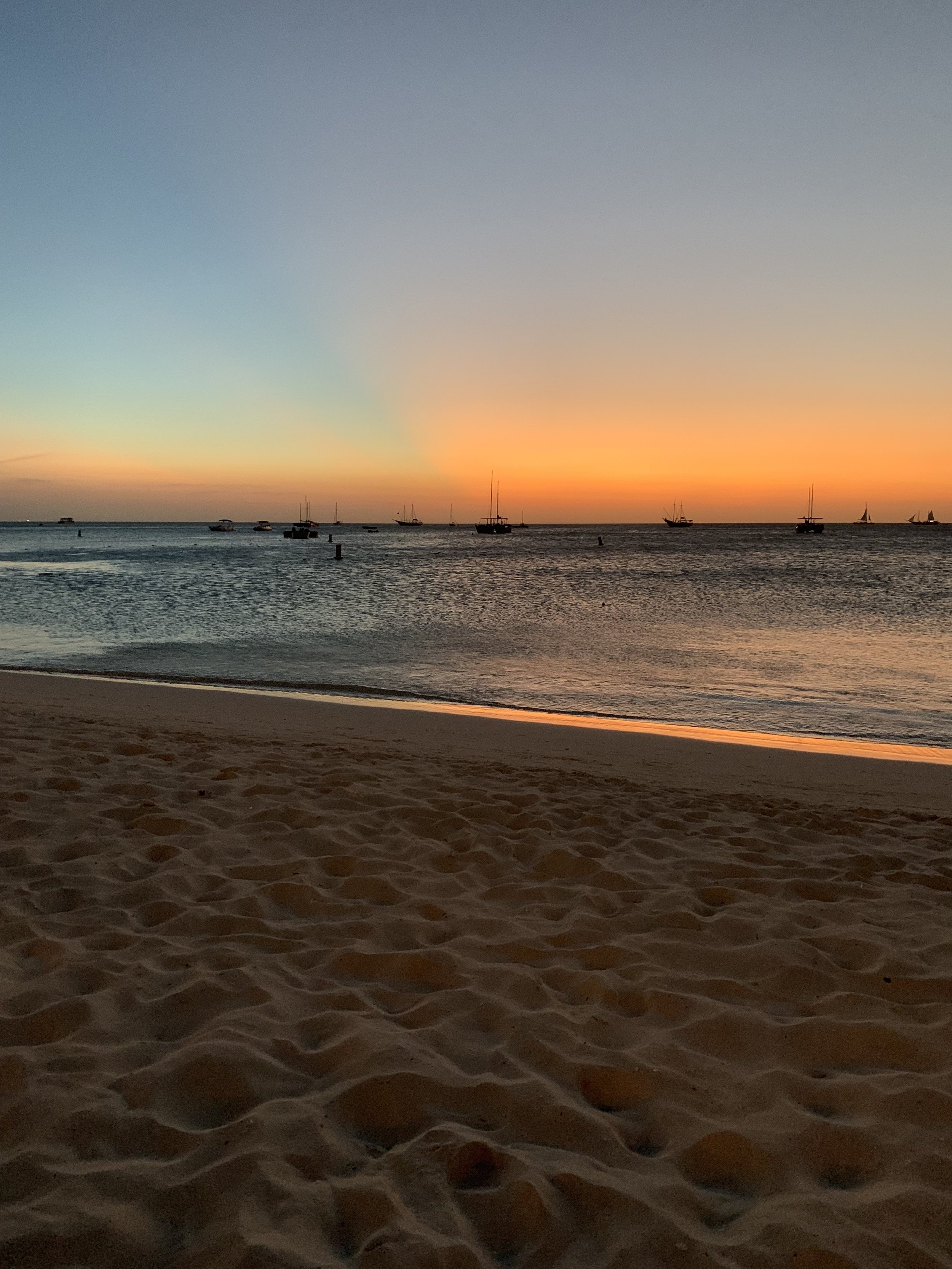
Sunset, Block Island

Sunset, Block Island

Should you have time for hiking, Rodman’s Hollow or the Hodge Family Wildlife Preserve offer a number of options. Bring mosquito repellent, as the trails can get buggy. Afterwards, treat yourself to a dinner overlooking the town beach at the lively Beachead: we enjoyed the tuna poke, fish and chips, and the baked haddock as we listened to the waves crashing across the road. Sunset colours lit up the sky and reflected back onto the wet sand as we agreed we’d be back. Soon.

Where to stay

Avonlea by the Sea

The 1661 Inn

Spring House Hotel

Where to eat & drink

Dead Eye Dick’s

Beachead

Bethany’s Airport Diner

Ballard’s for drinks

Captain Nick’s for live music & dancing

The Faroe Islands: wild, isolated and unexpected

The Faroe Islands are remote and hard to reach—and that’s a good thing. It means you should go now, before the crowds inevitably descend and the islands become the next Iceland, which has become rather too popular for its own good. Where are the Faroes, you ask? And why go there? Both good questions…

The Faroes are an isolated set of islands located roughly halfway between Scotland and Iceland. The inhabitants, numbering just 50,000, are descendants of the Vikings, and their language, Faroese, is most closely related to Old Norse. Volcanic, this set of 18 islands is well connected through a network of tunnels and helicopter routes (in fact, it’s currently home to perhaps the cheapest helicopter rides you can take, at roughly $20).

View from the lighthouse on Mykines

View from the lighthouse on Mykines

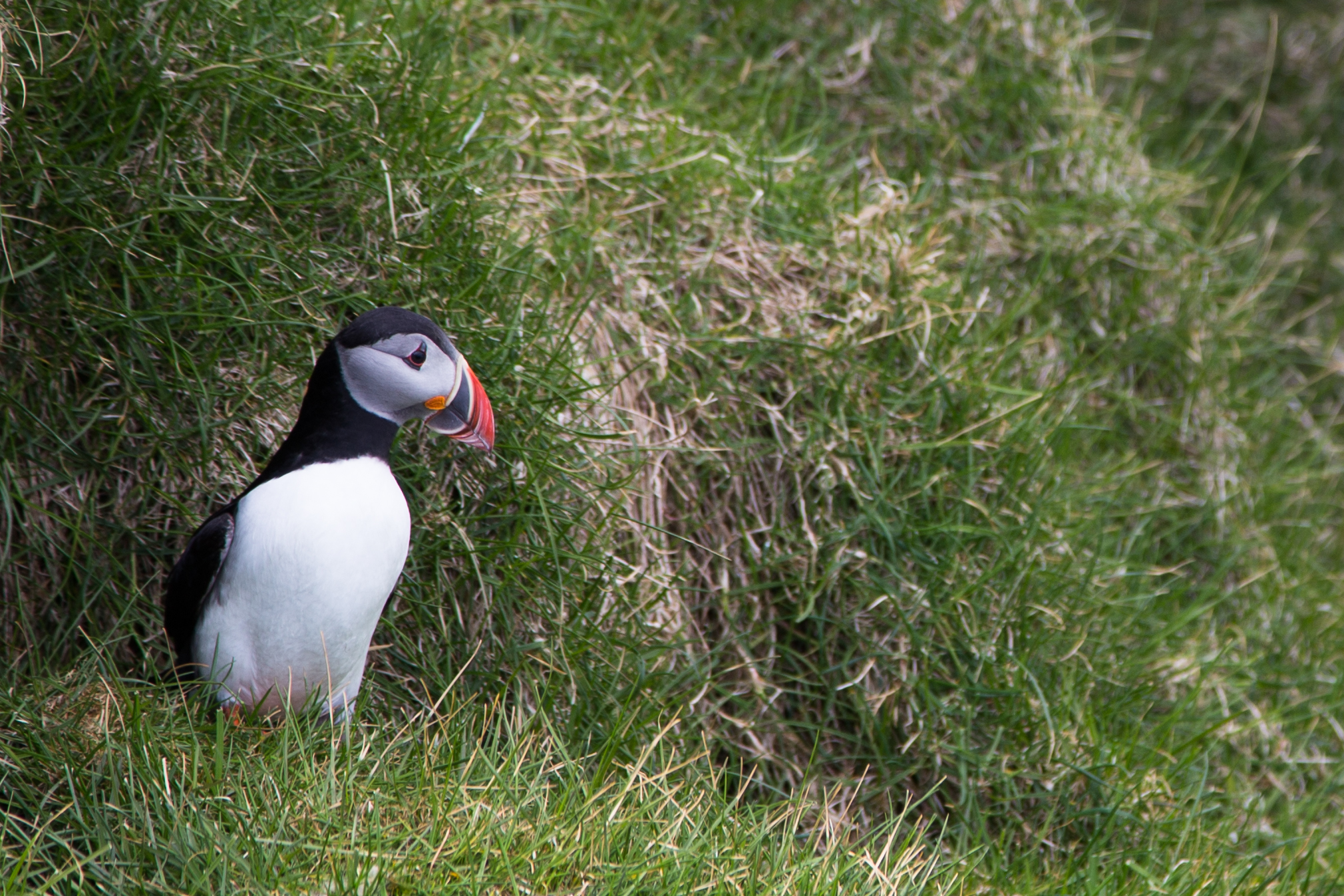
Upon landing at Vágar airport, you may want to head directly to Mykines, an island that is accessible only by ferry or helicopter. Known for its large population of local birds, including puffins, gannets, and fulmars, among others, it has no real roads or cars, giving it that sleepy end-of-the-world feeling. One of the locals, Heini, whose family has been on the island for generations, runs a fantastic day hike to the picturesque lighthouse at the eastern end of the island (he also rents out his cottage). At one point during our walk, Heini asks our group of 10 or so from around the world to be silent. As our ears open up to the sounds around us, we begin hearing individual bird calls in addition to the crashing waves in which the birds fish. We hear no man-made noise: no airplanes, no distant highways, no sirens. For a New Yorker, this is the ultimate escape.

Puffin on Mykines

Puffin on Mykines

Gannets off Mykines

Gannets off Mykines

The helicopter flight back to Vágar airport is about as glorious as 10 minutes can be: dramatically jagged cliffs and small beaches set against vibrant blue skies. With the flights subsidized by the Faroese government at roughly $20 a ride so that locals can get around with greater ease, it is perhaps only a matter of time before tourists are restricted or asked to pay unsubsidized fares.

To explore many of the remaining islands, a car can come in handy. Avis and Hertz operate on the islands, as do a few of the local companies, like 62 North. Given the last-minute nature of my trip, the best deal I found worked out to roughly $100/day—not cheap, but after all, you are on some of the most isolated islands on the planet.

Gasadalur and Múlafossur waterfall

Gasadalur and Múlafossur waterfall

A first stop might take you to the village of Gasadalur, via one of the islands’ one-way, rock hewn tunnels (be sure you heed traffic signs), to experience the picturesque Múlafossur waterfall dropping into the ocean below. You may want to follow that with a brisk 45 minute level hike to Trælanípan via the western side of Sørvágsvatn, the largest lake in the Faroes. From here you’ll experience a curious optical illusion: the lake appears to be a couple hundred metres above sea level, when in reality, it is only about 30. This was the only paid hike I experienced in the Faroes, at a cost of 100 DKK, which was easily payable by credit card with the friendly local at the entrance from the car park.

Trælanípan

Trælanípan

Another hike that is one of the highlights of the Faroes is up to the Kallur lighthouse on Kalsoy. Kalsoy, comprised of a long, thin stretch of mountains diving into the sea, is reachable by ferry from Klaksvík, the Faroes’ second-largest town (be sure to arrive at least 30 minutes in advance to be assured a spot on the ferry). The hike begins from Trøllanes and takes roughly 75-90 minutes. Worthy of a stop en route is Mikladalur, where a statue of the seal woman Kópakonan from local legend gazes over the town.

Klaksvík

Klaksvík

Kallur lighthouse, Kalsoy

Kallur lighthouse, Kalsoy

Near Kallur lighthouse, Kalsoy

Near Kallur lighthouse, Kalsoy

Kópakonan (Seal woman)

Kópakonan (Seal woman)

And who could resist visiting the highest peak of the Faroes, Slættaratindur? You’ll see a small parking lot just off the main road between Eiði and Gjogv. From here, the peak is about a 60-75 minute pure uphill hike. As you near the top, the hike becomes more of a four-legged scramble, and you may encounter snow. But the view is worth it: on a clear day, you can see most of the 18 islands that comprise the Faroes. Also not to be missed, a short drive away, is an easy, 10 minute walk from the main road to Hvíthamar, with a view of Funningur and the surrounding fjord.

View from the top of the world, Slættaratindur

View from the top of the world, Slættaratindur

Gjogv

Gjogv

Of course, driving through each village in the Faroes is like scrolling through the list of available dogs for adoption at your local shelter: each one induces successive exclamations of “Ooh, how cute!” One of the best known is Saksun, with picturesque grass-covered structures and the requisite steepled church encompassed by waterfalls gushing from the surrounding hills. The drive there alone is stunning, even without a place like Saksun at which to linger at the end.

Saksun

Saksun

Near Tjørnuvík

Near Tjørnuvík

But a large part of the appeal of the Faroes is to lose—or perhaps find—yourself in its isolation. For me, that place was Tjørnuvík and its surrounds. At the end of the road, featuring Viking graves with a large expanse of beach overlooking two rocky pillars (named Risin and Kellingin, or the Giant and the Witch, after a legend in which the two tried to steal the Faroes to bring them to Iceland), Tjørnuvík is as sleepy as it gets. At night, in the hot tub of my Airbnb, I listened to the waterfalls running down the surrounding mountains under the light of the full moon. In the morning, I ate waffles with rhubarb jam while watching the resident geese and sheep saunter between the two dozen or so houses that comprise the town. I felt at peace.

Heimablídni at Maud Hansen’s house on Nólsoy

Heimablídni at Maud Hansen’s house on Nólsoy

On one of my last evenings, I had the privilege of experiencing heimablídni, or home hospitality, at the home of Maud Hansen on the island of Nólsoy (easily reachable by ferry from Tórshavn, the capital). Maud is a gifted chef, and she prepared a typical Faroese meal focused on seafood, including local staples like fermented lamb. It was one of the highlights of my trip, and while I was lucky enough to go on a day’s notice, it is generally advisable to book in advance.

Tórshavn

Tórshavn

Kirkjubøur

Kirkjubøur

I also paid a visit to the capital, Tórshavn (or “houn”, as a the locals call it), which comprises 20,000 of the island’s population of 50,000, and feels like a cross between a colourful fishing village and a local commercial centre. You can eat very well at Barbara Fishouse, or Ræst, known as the only restaurant focused on fermented food outside of Japan, followed by a cool beer at Mikkeller, which has an outpost there. A short drive away is the historic village of Kirkjubøur, featuring the oldest church of the Faroes, built before 1200. I felt so safe that I gave a ride back to a few other tourists who had hiked there from Tórshavn before returning up north to my Tjørnuvík Airbnb. I had started to settle into the calmer local rhythms, and I was enjoying it. If you are looking for a place to reflect, and to spend time in true nature, the Faroes should be your next destination.

Tjørnuvík

Tjørnuvík

Midnight sunset, Tjørnuvík

Midnight sunset, Tjørnuvík

Packing list

  • Hiking gear

  • Many layers (the weather can change very quickly, and it can be quite cold, even in summer)

  • Sunscreen

Where to stay

Airbnb on Mykines

Airbnb in Tjørnuvík

Airbnb in Gøta

Where to eat & drink

Heimablidni (home cooked meals in locals’ homes)

Barbara Fish House

Raest

Etika Sushi

Koks

Mikkeller

Føroya Bjór (the local brewery)

City eats guide: Los Angeles

During my grad school years at Caltech, I lived in Los Angeles for five years. As a transplant from New York, I was initially skeptical of a city with few sidewalks where cars are king. But LA really surprised me in ways I did not expect, and it opened my eyes to the richness of cuisines of which I previously had no real understanding (I also have Jonathan Gold, the LA Times food critic, to thank for that). While I love living in NYC, it’s hard to beat LA’s Koreatown, San Gabriel Valley or plethora of regional Mexican restaurants.

A view of (somewhat smoggy) downtown LA

A view of (somewhat smoggy) downtown LA

On a recent trip, I revisited some of my old haunts and tried some new spots. Here’s a list of some of my favourites, in no particular order:

  • El huarache azteca (Highland Park) - Amazing Mexican specializing in huaraches

  • Guerilla taco (Downtown) - Creative and delicious tacos and tostadas

  • Soot Bull Jeep (Koreatown) - One of the best Koreatown BBQ spots

  • Chosun Galbi (Koreatown) - Another great Korean BBQ spot

  • Park's (Koreatown) - Another great Korean BBQ spot

  • Han il Kwan (Koreatown) - Unassuming spot for bibimbap (be sure to try their fish roe version, or albap)

  • Jae Bu Do (Koreatown) - Great for seafood BBQ, especially clams, and fun to go with a group. Gold’s review of this place is one of my favourite reviews ever.

  • Jun Won (Koreatown)  - Homestyle cooking with a great eundagu jorim (black cod casserole)

  • Settebello (multiple locations) - Settebello serves some of the best Neapolitan-style pizzas I have tasted in the U.S. (and it pains me deeply to write this as a New Yorker)

  • Sushi Nishiya (Glendale) - Owned by an unassuming husband and wife team in a strip mall, this place has some of the best sushi in LA. No California rolls or other such frills served here.

  • The Bazaar by Jose Andres (mid-Wilshire) - Inside the SLS hotel, this is a great special occasion place, with tasty tapas and fun cocktails (try the liquid nitrogen caipirinha)

  • Wassada (Koreatown) - The place to go in LA for live octopus (if you like your food to fight back)

  • Malan noodles (Hacienda Heights) - A bit farther afield, but if you are in the area, get the spicy beef noodles.

  • Din Tai Fung (multiple locations) - The initial location of this Taiwanese chain was in Arcadia, and the xiao long bao (soup dumplings) there are hard to beat. Other locations can be hit or miss.

  • Quality Seafoods (Redondo beach) - The freshest seafood in town. Located on the Redondo beach pier, come here to satisfy your fresh sea urchin, oyster, crab and fish cravings.

  • Animal (West Hollywood) - Great meat-focused restaurant with offal specialties. The foie gras and beef dish is a must.

  • The Nomad (Downtown) - The second location of the eponymous NYC hotel, LA’s version is NYC inspired with a twist of Mediterranean. The restaurant features a delicious set of small plates, and the cocktails and pool on the rooftop are refreshing and fun.

  • Maruhide Uni Club (Torrance) - If you’re an uni lover, this place will feel like heaven. Featuring uni served in a myriad different ways, it’s hard to go wrong. Highlights included the Ensui Uni Zen (stored in salt water, imparting a sweeter and richer taste) and the lightly grilled scallop and uni appetizer.

  • Gjelina (Venice) - A farm to table restaurant with great pastas that’s here to stay

  • Fishing with Dynamite (Manhattan Beach) - Fresh seafood in one of the nicest beach towns in LA with some of the best clam chowder and fun decor

  • Sugarfish (multiple locations) - Pretty good bang for your buck sushi

  • Son of a Gun (Mid-Wilshire) - Great southern influenced seafood, and they often have an uni dish to boot!

  • Jitlada (Silverlake) - Specialising in Southern Thai dishes, Jitlada is as authentic as you will get. The spice levels are real, and you will leave feeling like a fire-breathing dragon.

  • L&E Oyster (Silverlake) - Good oysters in Silverlake

  • Cafe Stella (Silverlake) - Great French brunch and dinner - be sure to try the escargots and the truffle fries, or the Moroccan eggs for brunch

  • Messob (Mid-Wilshire) - In the area known as Little Ethiopia on Fairfax Ave. Another good spot to try is Meals by Genet.

  • Daisy Mint (Pasadena) - Surprisingly good Thai fusion.

  • Diddy Reese (Westwood) - Go for their ice cream sandwich. The cookies themselves are great, the ice cream so-so, but the price ($3 or so) is unbeatable. There is often a line as it’s right next to UCLA.

  • Salt & Straw (multiple locations) - Some of the best ice cream around, including a delicious mint chip made with actual mint (a rarity these days) from Seely’s mint farm in Oregon

Aruba: wrecks, beaches and kites

Aruba isn’t the kind of place that would normally be at the top of my list, as it’s heavily frequented by cruise ships and package tourists. But its small size belies a vibrant culture and history.

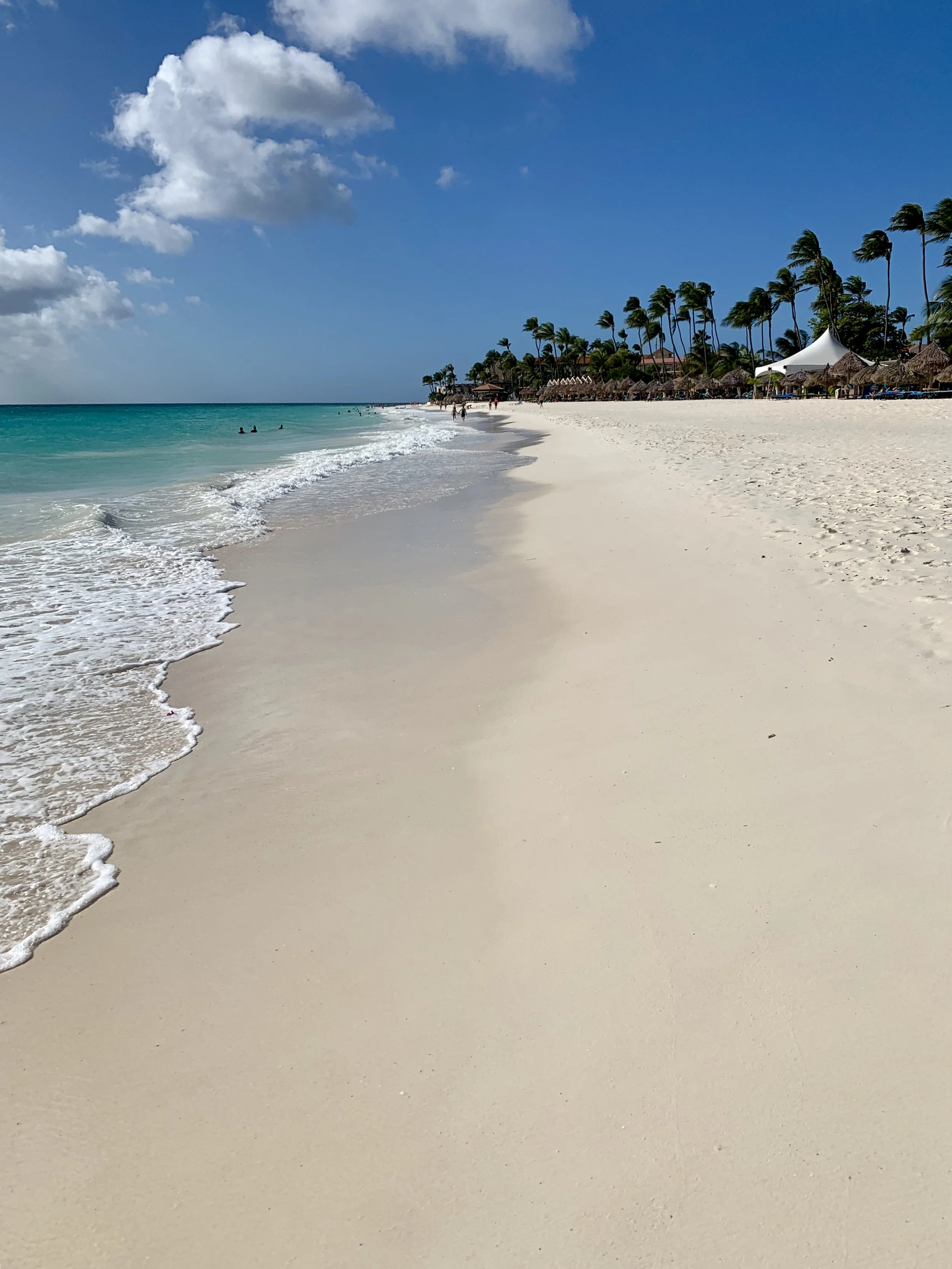
Druif Beach, Aruba

Druif Beach, Aruba

During World War II, the SS Antilla, a German cargo ship built for trade with the Caribbean, found refuge in neutral Aruba. Her German crew scuttled the ship to avoid capture by the Dutch in 1940 when their country invaded the Netherlands, and it remains one of the largest wrecks in the Caribbean. Today, numerous fish, sea turtles, corals and eels have made the ship their home, to the delight of groups of divers who visit daily. The water temperature is unexpectedly cold, at 23C in January, so bring your thickest wetsuit! I went diving with Happy Divers in conjunction with a second dive at the beautifully preserved Arashi reef, but all dive shops on the island offer only 2-3mm shorties, so it’s best to arrive with your own gear.

Cruise ship approaching Oranjestad

Cruise ship approaching Oranjestad

Kitesurfers off Boca Grandi beach

Kitesurfers off Boca Grandi beach

Above water, Aruba offers numerous pretty stretches of sand, though they can get quite crowded and noisy on the weekends or when one of the larger cruise ships docks in port. My favourite is the more low-key Druif Beach along which lies the low-rise Divi Dutch Village Beach Resort. Worth a stop are Divi Beach and Arashi Beach, and we enjoyed watching the kitesurfers cruise along the shoreline at Boca Grandi. Due to the rocky shoreline, the western side of the island is quieter and much less crowded. Skippable is Baby Beach, which was full of unloadings from the cruise ships and unfriendly touts charging upwards of $100 for a bit of shade. Should you want to brush up or try out your kitesurfing skills, the Aruba kitesurfing school on the east side of the island is a good choice. The calmer winds are great for beginners.

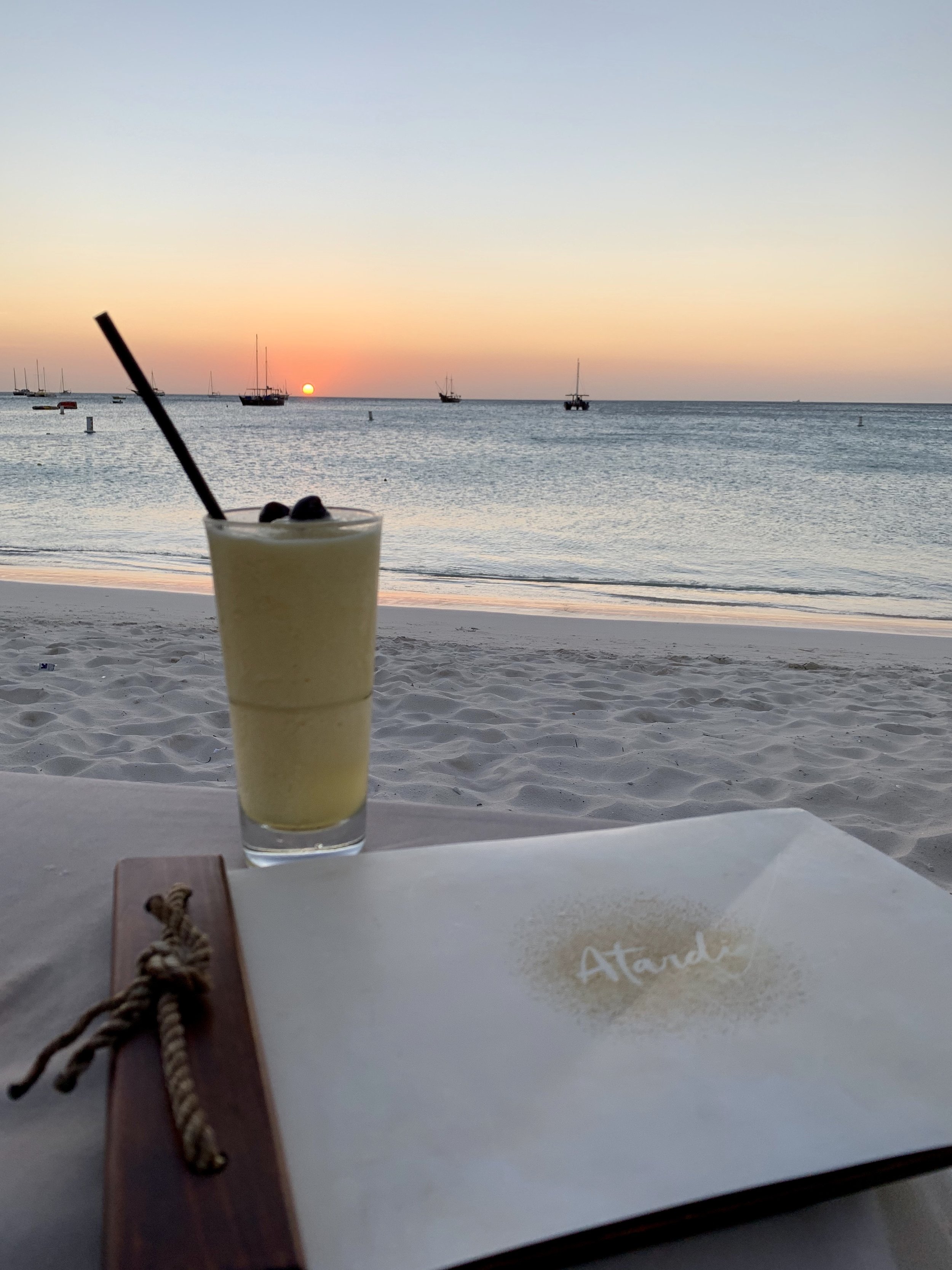
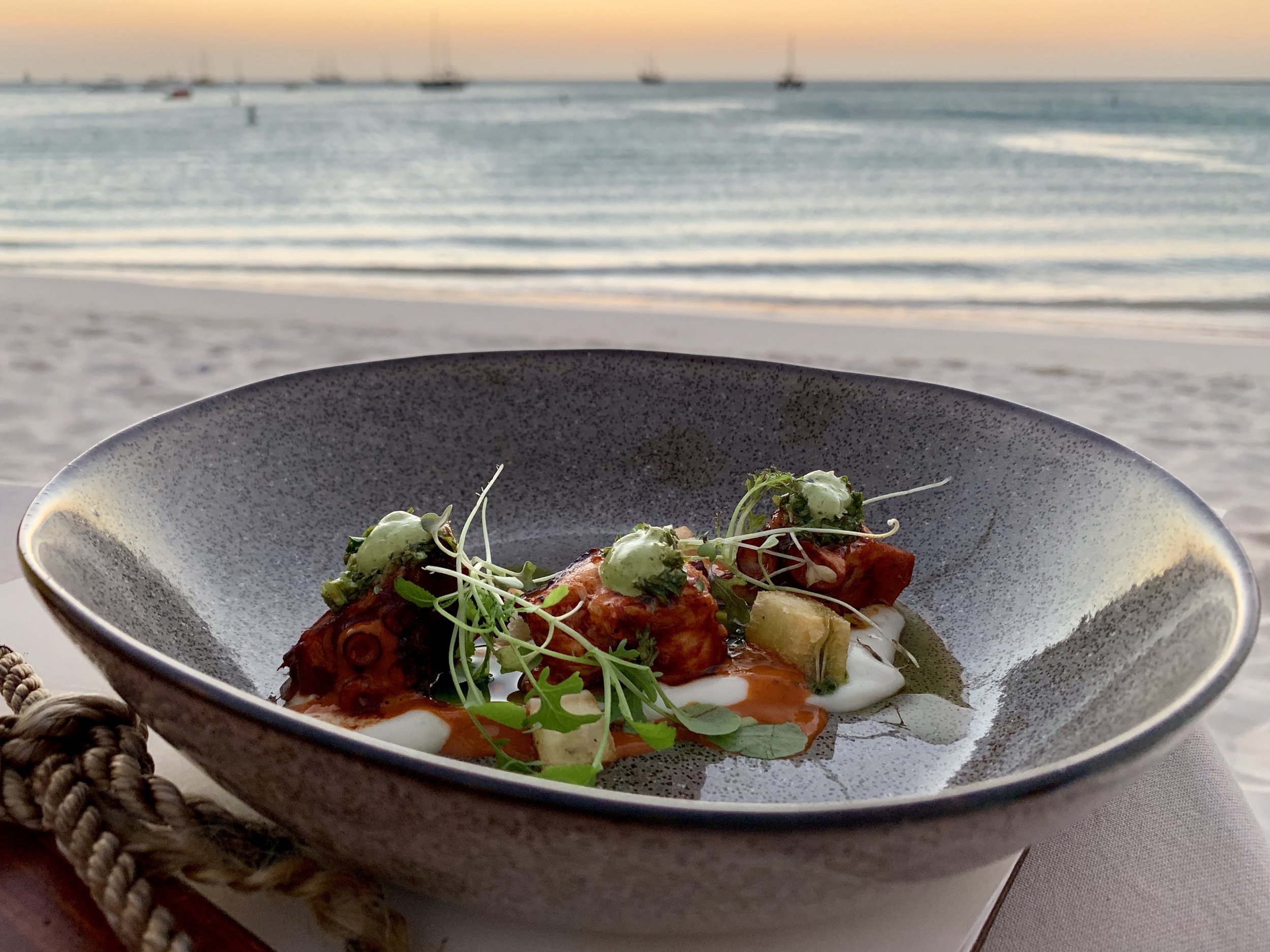
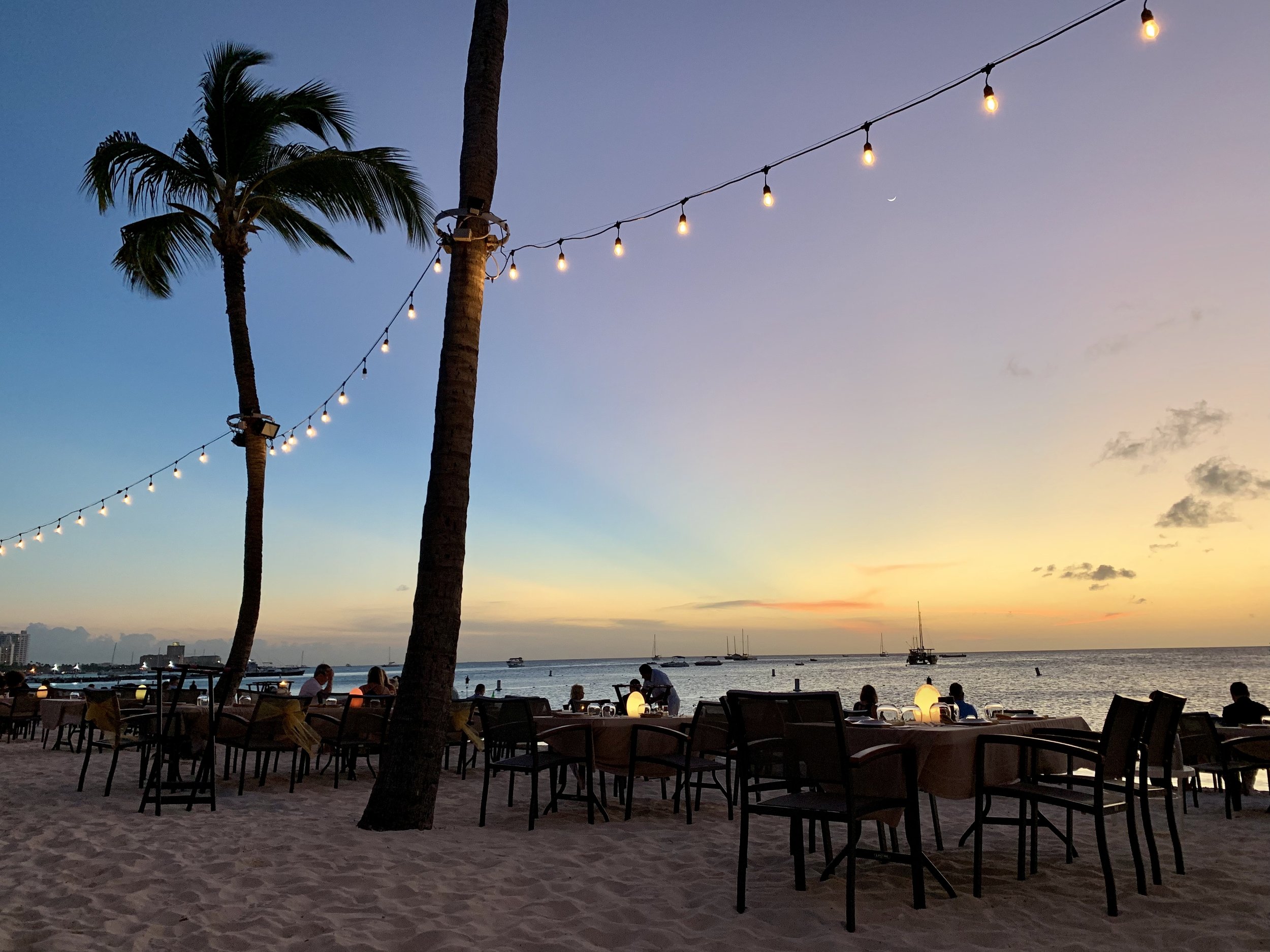
The longer Palm beach, along which lie the island’s high-rise hotels as well as one of Aruba’s best restaurants, the beachfront Atardi, is also worth a stroll. Atardi is surprisingly one of the few restaurants on the island at which you can eat with your feet in the sand. Particularly delicious and creative are their preparations of octopus, burrata, and macadamia-crusted grouper. We also enjoyed our dinner at the Italian-influenced Faro Blanco, though the views certainly outshine the food. Matthew’s is another spot near the beach great for brunch, and the Dutch Pancakehouse is deservedly popular for its namesake dish. For a quick bite to eat, Pastechi House is a good choice, and the frozen coffee at Juan Valdez is a great morning or afternoon pick-me-up.

View from Faro Blanco

View from Faro Blanco

We stayed at a wonderful Airbnb in the capital, Oranjestad, run by our host Marlene and her husband Sylvester that we would happily stay at again. You will definitely want to rent a car, as public transit on the island is relatively limited. With all of the available activities, Aruba is a perfect long weekend or even weeklong getaway.

Where to eat

Palm beach, Aruba

Palm beach, Aruba