Top

Sardinia, a gastronomic paradise

Sardinia is a fantastically beautiful island with some of the friendliest people I have ever met. It’s got a rich history - Phoenicians, Punics, Romans, Spanish, and French all ruled here at various points, and this Mediterranean mixture is evident in its food and language. To boot, the food is amazing and the driving is curvy and fun. It is larger than it looks, and in a one-week and relatively fast-paced trip, we managed to cover some of the highlights of the top half of the island. You can view our rough itinerary in Google maps here.

The whitewashed buildings of Alghero

The whitewashed buildings of Alghero

We flew into Alghero, a beautiful seaside town in the northwest of Sardinia serviced by a number of low-cost European airlines, including Wizzair, in early September, hitting the tail end of the busy tourist season. We rented a car from Sicily By Car at the airport (reserving ahead of time), which provided the best rates at the time. We stopped off at La Boqueria fish market in Alghero (be sure to check the hours before you go, and be aware that there’s often a wait) and took a stroll along the boardwalk lined with restaurants along the seaside. From there, we continued north to Stintino, checking in at the small and pretty basic B&B Sa Serra. Once settled, we walked to La Pelosa beach - easily one of the most crowded beaches I have ever been to. We took a brief walk and dipped in the water, which was marvelous, but I would recommend going in the off season. Do, however, take a stroll through the town of Stintino. Numerous shops sell local products (a few personal favourites include bottarga, or cured and dried mullet roe, local cheeses, and peperoncino piccante, or dried spicy pepper).

The next day, we headed to meet Claudio and Sara of Futurismo Asinara for a catamaran tour of the Asinara National Park - by far one of the highlights of our trip. Claudio and Sara were incredibly kind and welcoming, and we truly felt at home aboard the catamaran. We did the ½ day trip starting in the morning, visiting the south and eastern parts of the park and marine protected area. The snorkeling was fantastic, the water colours unbelievable, and Claudio’s knowledge of the flora and fauna encyclopedic. Afterwards, we drove on to the stunning seaside town of Castelsardo, where we visited the castle (recommended, especially for the views) and feasted on a late lunch of local oysters and paccheri pasta with squid, zucchini and mullet roe at Il Cormorano, one of the best meals of the trip.  
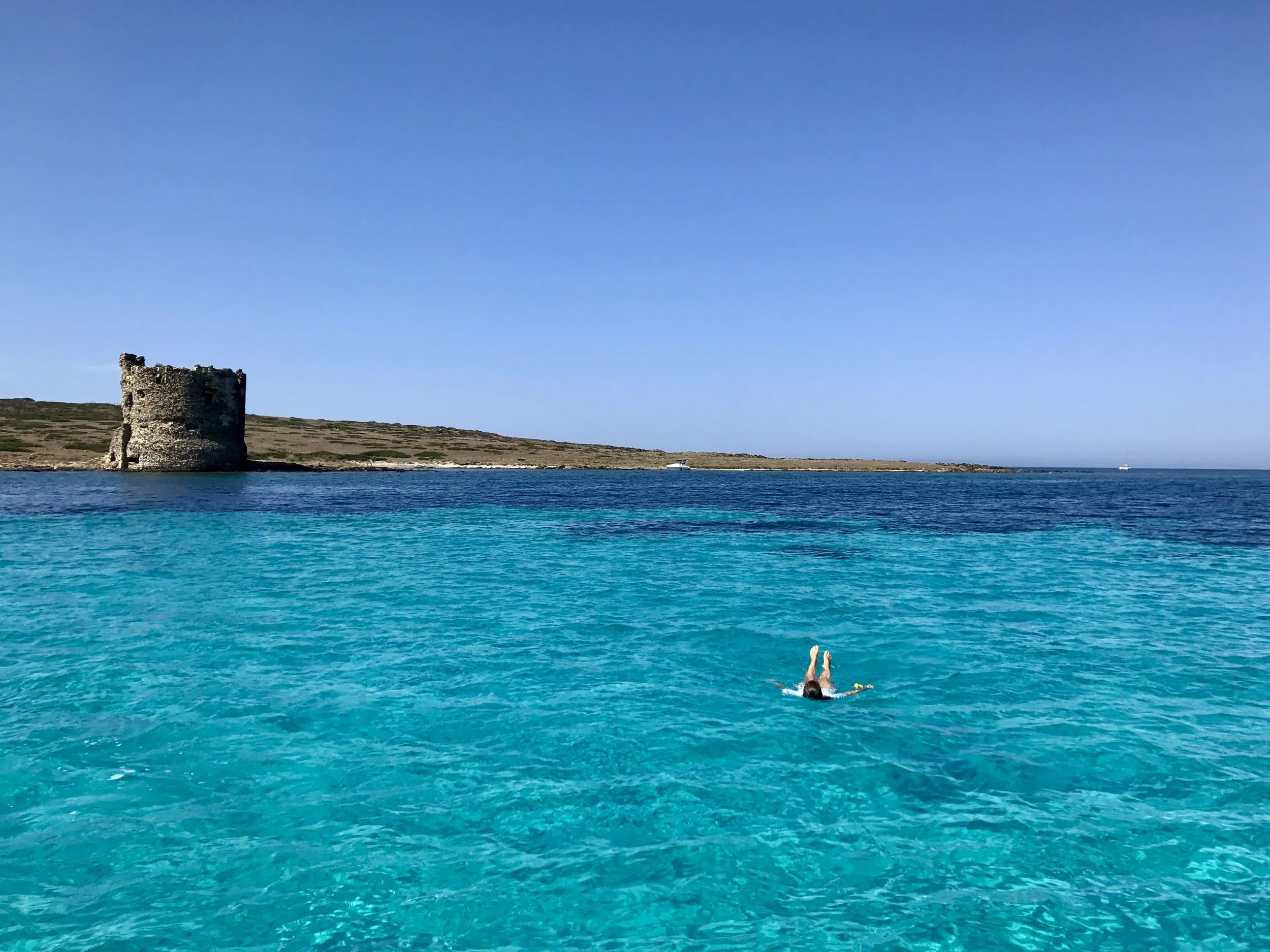
Enjoying the sea in Asinara National Park

Enjoying the sea in Asinara National Park

View of Castelsardo

View of Castelsardo

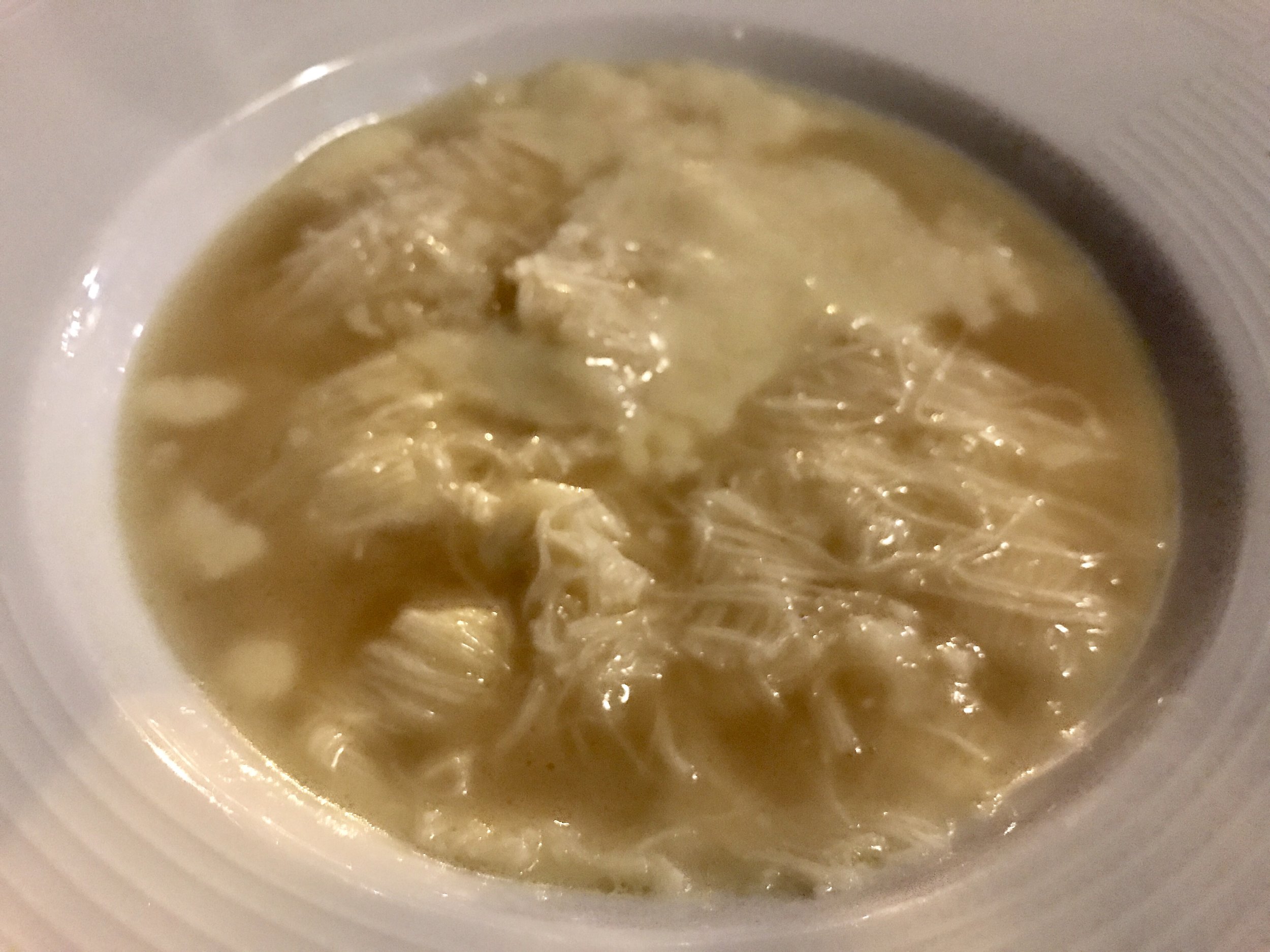
From there, we drove on to Burgos, a charming mountaintop town with stunning views and no tourists, and to Nuoro, a larger, more vibrant city, where we stumbled upon a local festival featuring a typical dish of local snails in tomato sauce. For dinner, we had reserved at Ristorante Ciusa, asking the chef, Franco Fenu, to prepare us a special meal of the soon-to-be-extinct su filindeu pasta. We got two versions: the classic and one made with squid ink and seafood. Both were fantastic. We then set off for a drive to Cala Gonone along some very windy and narrow mountain roads—Sardinia is truly a stunning and unexpected place.

View of Burgos

View of Burgos

The following morning, we walked down to the port in Cala Gonone to meet our gommone, or inflatable boat, for a tour of several coves and beaches: Cala Luna, Cala Mariolu, and Cala Goloritze, among others. Although crowded, the colours here are unparalleled - the white rocks turning the water into various shades of aquamarine and turquoise. This was probably our favourite day, alongside the previous one in Asinara. I also managed to get a couple of dives in with Argonauta.it —they were kind and easy to dive with. We visited a wreck as well as some of the fantastic nearby cavern formations—Cala Gonone is certainly a cave diver’s paradise.

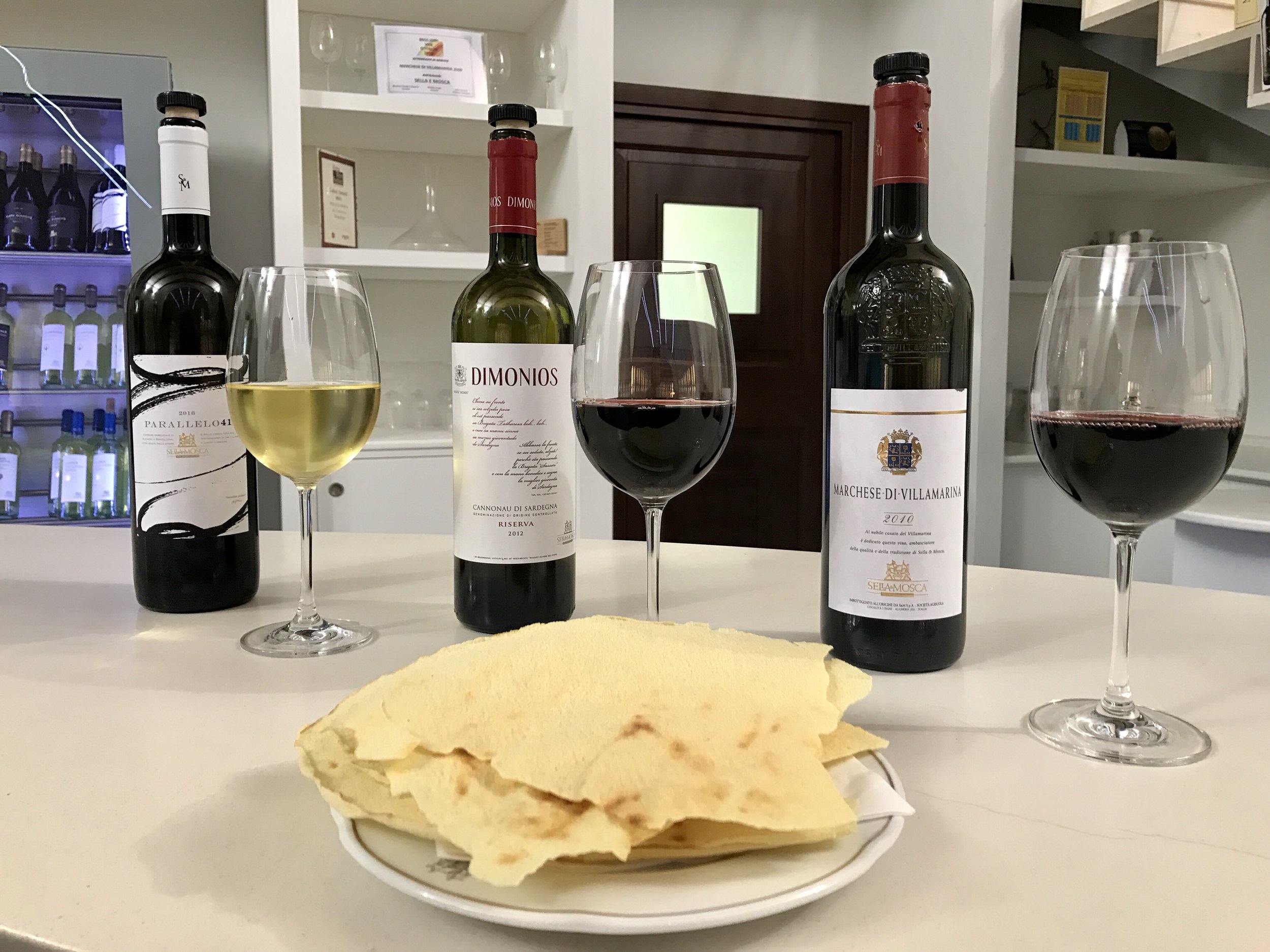
The following day, we made our way up some windy mountain roads to the colourful and rustic Su Gologone for lunch. Due to a road closure, we ended up taking a rather adventurous route over narrow stone bridges and through small agricultural plots - one of many stunning moments on the road in Sardinia. Su Gologone was well worth the detour - it’s worth spending some time exploring the property (or even staying the night!), and lunch was very tasty local fare. En route to Agriturismo Testone, we also stopped by Cantina Sociale Dorgali for some wine tasting. They feature some tasty wines, none above 10 euro a bottle, and the staff were incredibly friendly. And no visit to Sardinia is complete without viewing some nuraghe, megaliths erected during the Nuragic age between 1900 and 700 BC whose use is not fully understood. You will see these throughout the island. We enjoyed stopping to see the ones at the Parco Archeologico Capichera near Arzachena.

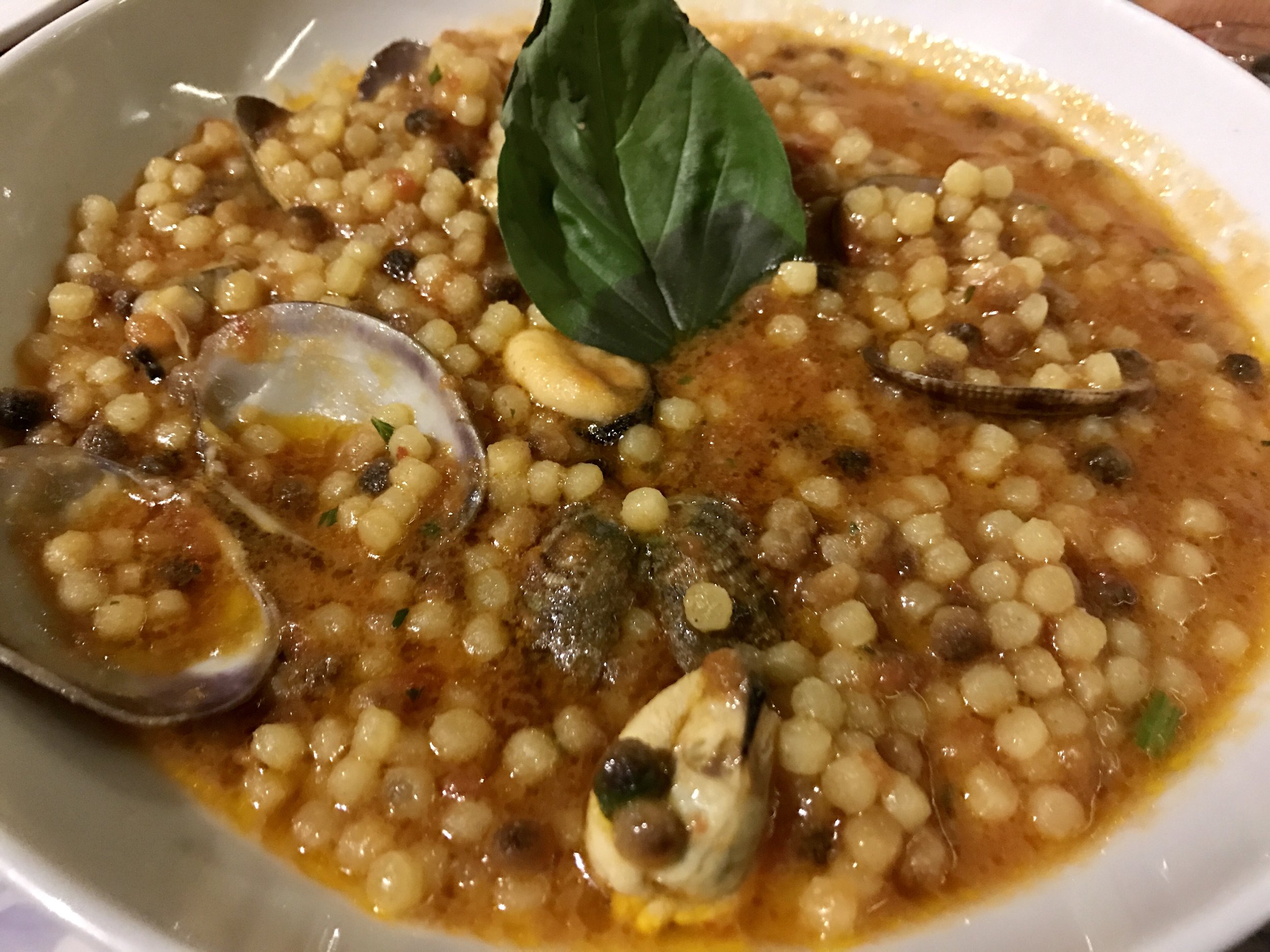
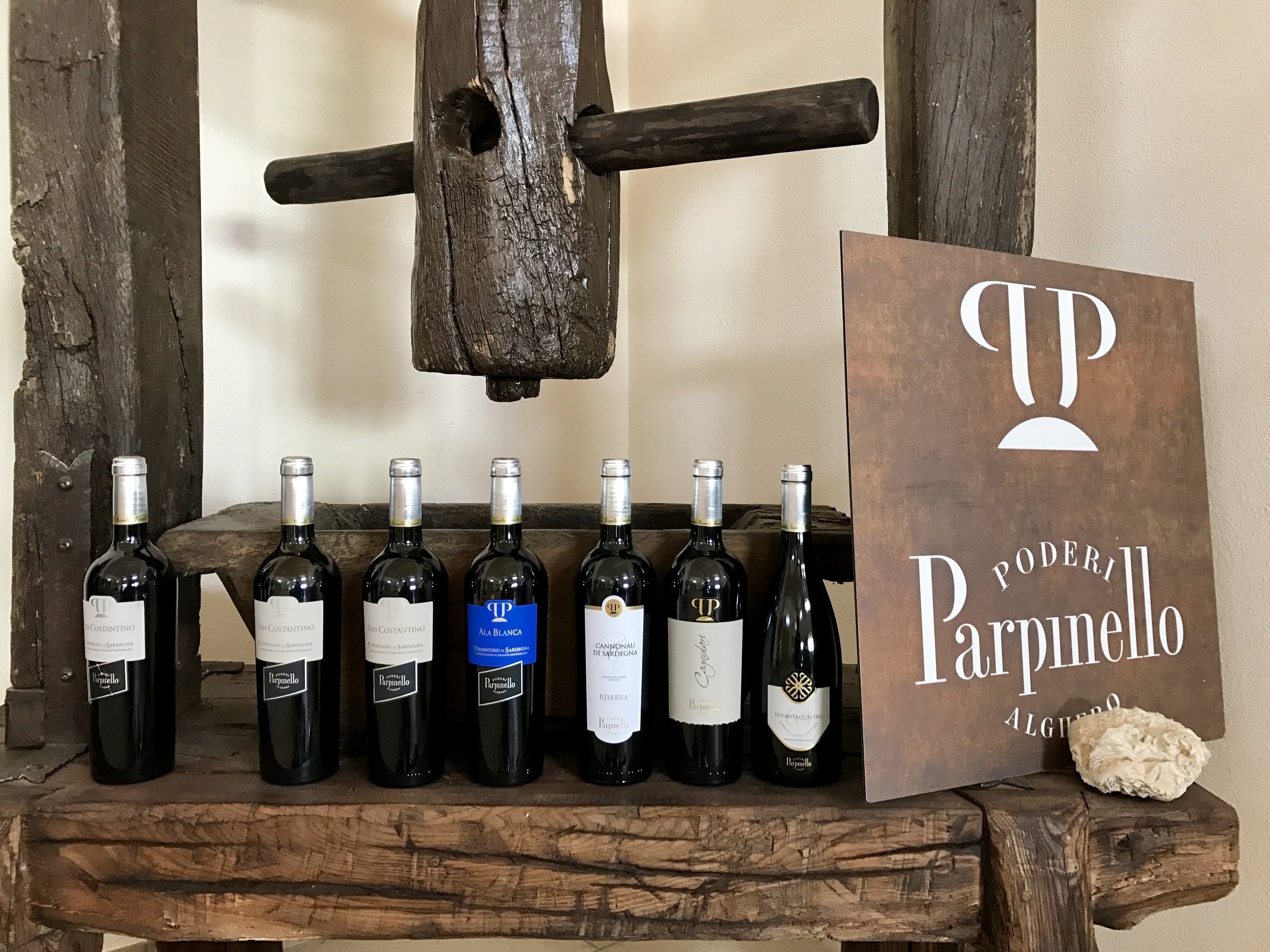
Su Gologone, above. Below, a sampling of Sardinia's gastronomic delights - culurgiones, su filindeu pasta, fregola sarda and many affordable, often not available for export wines.
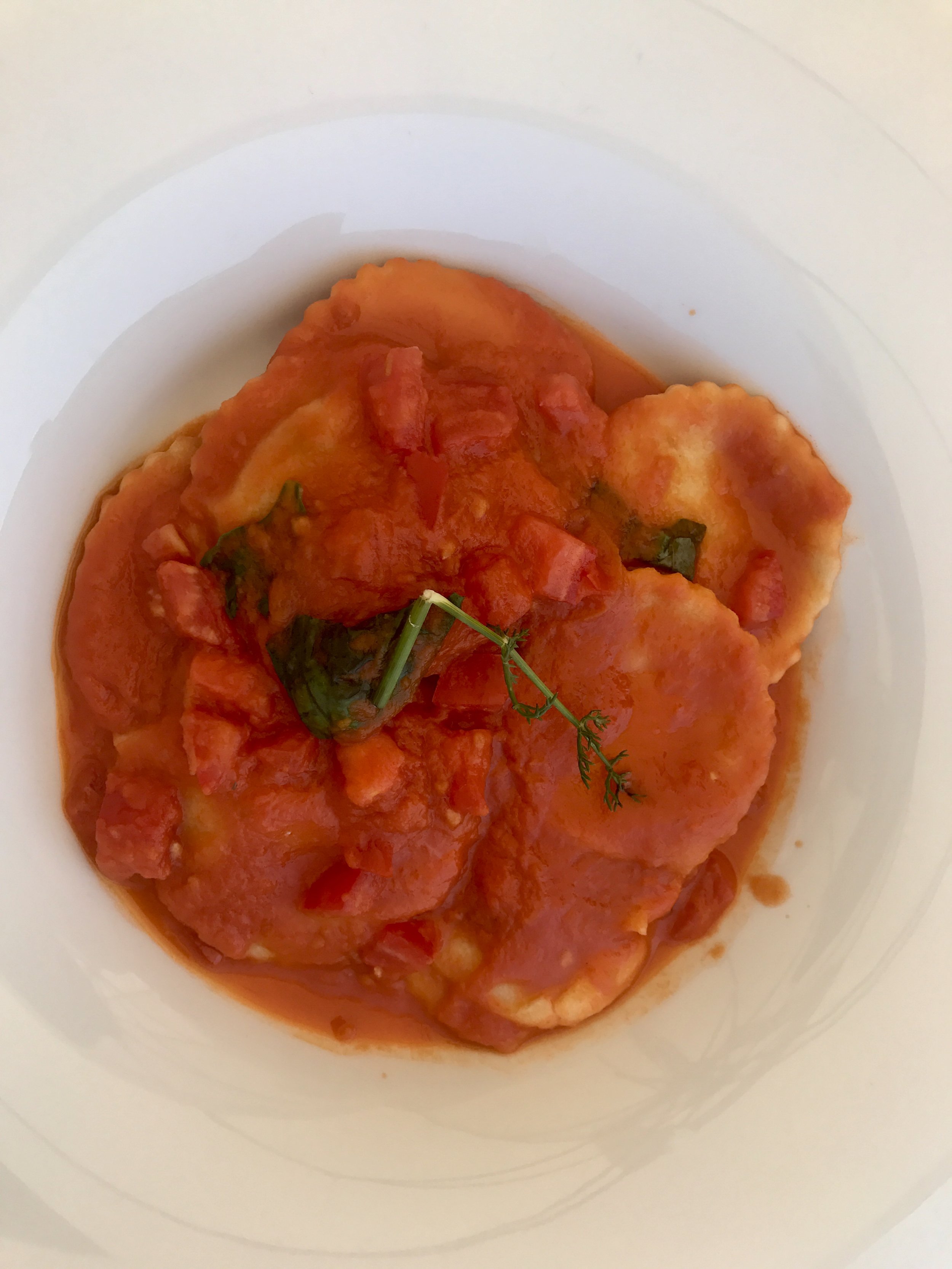
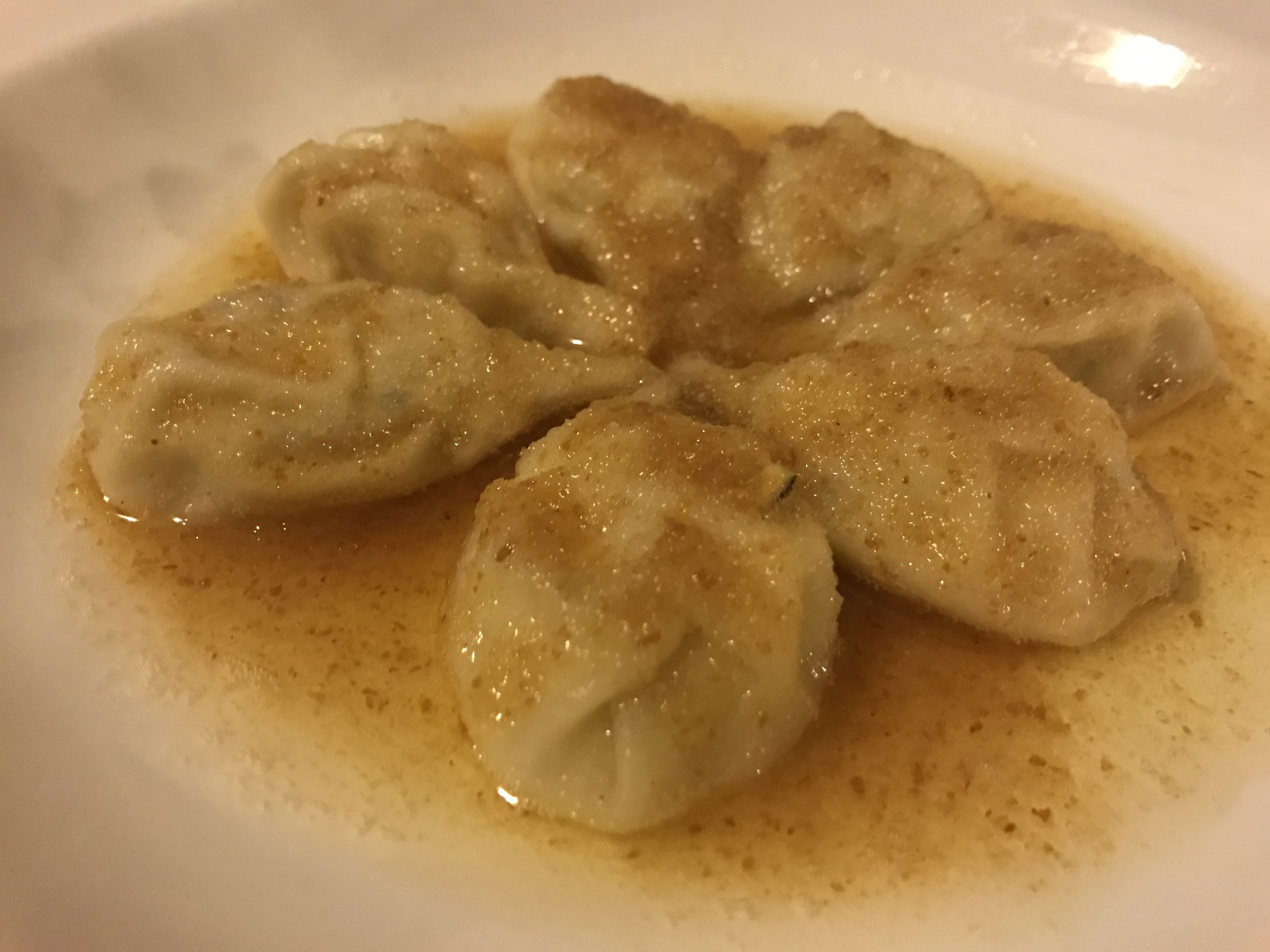
Su Gologone, above. Below, a sampling of Sardinia's gastronomic delights - culurgiones, su filindeu pasta, fregola sarda and many affordable, often not available for export wines.
At the agriturismo (a recommended experience if you’re travelling through Sardinia, as it gives you a glimpse into the more local, inland life), we were served a large family-style meal with other travellers staying there. The food was delicious and plentiful, and there was wine and a variety of local cheese and charcuterie to try. The resident dogs made us immediately feel at home, and it was a contrast to the modern touches and shiny vistas at Hotel Petra Bianca in Cala di Volpe. The hotel and surrounding vistas are beautiful, if a bit soulless. In the surrounding beaches and in the rich centre of Porto Cervo, expensive handbags and megayachts conveyed a very different feel, and we were happy to go back to simpler pleasures once on Isola della Maddalena, to which we took a car ferry. We especially enjoyed the rich forest greens of neighbouring Caprera island. As always, the beaches were crowded, but it was easy enough to find some tranquility inland. We also did a day trip to see the famous pink beach, Spiaggia Budelli (inaccessible to tourists due to sand erosion, but you can view it from afar or from the water).

The high life at Hotel Petra Bianca

The high life at Hotel Petra Bianca

Spiaggia Budelli

Spiaggia Budelli

En route back to Alghero, we had a fantastic lunch at La Gritta in Palau. The sea views are beautiful, and the seafood is such that lingering and ordering more is a clear choice. From Palau, the road winds inland and much of the traffic and crowds disappear until you reach the vicinity of Alghero. At Poderi Parpinello winery, Giuliana greeted us as we drove up. She was very responsive over email, and it was easy to arrange our visit. What we were not prepared for was how incredibly kind and welcoming she was: such people are truly rare. We had perhaps one of our nicest afternoons in Sardinia walking through the Parpinello vineyard, with Giuliana showing us cork trees and walking us through the wine-making process as we watched some of the early harvest getting crushed. She was so gracious that by the end of our tasting, we were trying to see if we could help distribute their wines in the U.S. Many Sardinian wines are not exported to the U.S., and the ones that are often receive a markup. One tip is to bring a bag you can check on the return trip to take some wines with you - well worth the effort. It’s yet another reason to return to this incredible island.

A cork tree at Poderi Parpinello winery

A cork tree at Poderi Parpinello winery

Along the seaside boardwalk in Alghero at dusk

Along the seaside boardwalk in Alghero at dusk

What to bring

  • Comfortable hiking shoes or sneakers

  • Water shoes

  • Snorkel, mask and skinsuit

  • Scuba diving cards

  • GoPro or a camera for capturing in/underwater footage

Where to stay

Hotel Domomea, Alghero

Su Gologone, near Cala Gonone

Agriturismo Testone, near Nuoro

Hotel Petra Bianca, Cala di Volpe

Where to eat

Il Cormorano, Castelsardo

Ristorante Ciusa, Nuoro

Su Gologone, near Cala Gonone

La Gritta, Palau

Top 7 Beaches in the World

As an avid beach goer, I’m often asked to name some of my favourite beaches around the world. What defines these places is not just physical beauty, but also a deeper connection to the surrounding place and environment. And it doesn’t hurt if it’s remote, either.

7. Balos Bay, Crete, Greece

I first visited this beach back in 2002 on a family vacation. At the time, the only way to reach it (unless you were lucky enough to have a private boat) was by car along a very rocky, difficult to navigate road. When the road ended, you could hike down, the beauty of the giant rock and thin strip of pink sand connecting it to the mainland coming into view. Most striking of all, in the distance the darkened remains of a shipwreck marked the otherwise blue-green water. And best of all—we were alone.

When I went back just three years later, there were tourist boats taking daytrippers to the beach, complete with beach chairs and umbrellas. Still very much worth visiting, but you’ll have to time your visit right.

Balos Bay, Crete, Greece

Balos Bay, Crete, Greece

6. Aitutaki, Cook Islands

The array of colours and sharp contrasts between the blues and greens was among the most beautiful I’ve ever seen in nature at Aiutatki lagoon. It’s a relatively remote atoll, but worth every penny to get to. I was lucky enough to visit while on board the National Geographic Orion from Rarotonga via Kiribati to French Polynesia. We visited one of the islands in the lagoon, featuring the kinds of palm trees typically seen on postcards. The shallow water surrounding the island made for stunning photographs, and fish and dolphins were plentiful.

Aiututaki, Cook Islands. Photo credit: Jay Dickman

Aiututaki, Cook Islands. Photo credit: Jay Dickman

5. Abel Tasman, New Zealand

Abel Tasman is a rewarding hike through a spectacular stretch of nature in what is already one of the world’s most beautiful countries. You can opt to have Abel Tasman water taxi services drop you off and pick you up elsewhere the same day as you hike through and stop at waterfalls, beaches and suspension bridges en route, or you can also do a similar trip camping with overnight stops. Sea kayaking is also available, and there’s a beach for everyone—truly an adventurer’s paradise. This stretch of coast is a must-visit for anyone planning a trip to New Zealand.

Abel Tasman, New Zealand

Abel Tasman, New Zealand

4. Tulum, Mexico

A long stretch of white sand beach and crashing waves dotted with small boutique hotels (my personal favourite is Sueños) featuring hammocks and bean bags, Tulum is the ultimate relaxation getaway. But should you tire of drinking spicy mezcal cocktails and stuffing yourself with tacos or tortilla soups on the beach, there are plenty of activities to keep you occupied. Several kitesurfing schools line the beach, and stand up paddleboarding is also available. A short drive away are cenotes, or underground freshwater caverns with openings through which sunlight and snorkelers stream in. Scuba diving is also available (and highly recommended). One such dive, studded with the effects of halocline and stalactites, convinced me to start my cave diving certification with Bil Phillips of Speleotech, a highly experienced cave explorer and instructor.

Tulum, Mexico

Tulum, Mexico

3. Praia do Leão, Fernando de Noronha, Brazil

This beach is often overlooked in favour of the neighbouring Baia do Sancho, which garners all the accolades. Praia do Leão is its wilder cousin, reachable either by walking from the nearby Praia do Sueste (also worth a visit to spot baby lemon sharks in the shallows or for a swim and snorkel), or hitching a ride. It’s not suitable for swimming, and there are no concessions, so bring plenty of water. Have a seat on the sand, watch the waves pound away at the surf, and contemplate writing your own version of Baudelaire’s Man and the Sea.

Praia do Leão, Fernando de Noronha, Brasil

Praia do Leão, Fernando de Noronha, Brasil

2. Anakena, Easter Island

Easter Island is a special place, and this beach is no exception. Seven moai statues overlook the pink sand and natural harbor with turquoise water. There are a fair number of people, but the beach is large enough that is doesn’t feel crowded. There are several nice vantage points nearby, and it’s an easy place to while away an afternoon reading, swimming and enjoying the views. And of course to wonder, who was this ancient civilisation who built the moai, how, and why? And other questions that we may never have answers to.

Anakena beach, Easter Island

Anakena beach, Easter Island

1. Aldabra, Seychelles

Aldabra is as remote as it gets, uninhabited save for a small environmental research station, and reachable only by boat. It is the second-largest coral atoll in the world, and the only place besides the Galápagos where the giant tortoise roams—a mystery to this day. The tortoises have plenty of company, with large coconut crabs in various hues of purple, orange and yellow hiding in the trees, and some of the best scuba diving in the world just beyond the lagoon. Small black-tip reef sharks like hanging in the shallows of the white sand beaches and may curiously check you out. You’ll be some of the only humans for miles in this remote part of the Seychelles. Need I continue?

The Seychelles

The Seychelles

A giant tortoise on Aldabra in the Seychelles

A giant tortoise on Aldabra in the Seychelles

Enjoyed this article? Check out my most recent post on the Top 7 Most Beautiful Islands.

Belize (and a bit of Guatemala)

I’d been planning a trip to Belize for years, so it was with great excitement that a close friend of mine and I found relatively inexpensive tickets over Thanksgiving 2017. Unfortunately, there are no direct flights from NYC, so we flew via Toronto on the way there with WestJet and Miami with American on the return, with about 10 days on the ground. This was my first time flying WestJet and I was impressed with the ahead-of-time departure and incredibly nice disposition of the airline staff, both at the gate and on the plane.

The Great Blue Hole

The Great Blue Hole

I subscribe to Scott’s Cheap Flights (just the regular, unpaid, subscription, though I imagine the paid one also provides lots of value) as well as The Points Guy (especially good for credit card signup points and other alerts). For this trip, I didn’t use either, opting to set price drop alerts in Google Flights. Once the price dropped to about $600, we purchased our tickets (a reasonable price for that time of year when booking less than a month in advance).

This map may be useful to anyone planning a trip to Belize - there’s nice detail on it.

We arrived in Belize City in the early afternoon and made our way to the domestic check-in for a charter flight we booked with Tropic Air that would take us around the Great Blue Hole and then to San Pedro. One thing to note: there is a duty free store before you exit International Arrivals. Staff told me prices were in Belizean Dollars (exchange rate of 2 BZD=1 USD), so we bought some wine here. However, I later saw on my credit card statement that I’d been charged in USD at the displayed prices - so everything was twice as expensive as it should have been. Avoid.

We booked our charter flight with Tropic Air for 1755 BZD total (including taxes). Note that we also tried contacting Maya Air, another local airline, for a quote, but despite several emails, they never got back to us. Once on the domestic side, everything went smoothly, and we were told to check in with Tropic Air at our departure gate. The agent working there said he’d come find us in the terminal once our small Cessna airplane was ready. The terminal features a bar, a few small places for a quick bite, and some souvenir shops - best to purchase food before arriving at the airport if you plan to spend any amount of time there. Unfortunately no lounges/Priority Pass here (hopefully you’ve all got your Chase Sapphire Reserve card, which offers free Priority Pass access as one of its many benefits).

TropicAir.jpg

Our airplane was ready for us at the requested time, and after some brief introductions with our friendly pilot, we were off! It was about a 30 minute flight out to the Great Blue Hole, and it was worth every penny we’d spent on the charter flight. Our pilot circled around the hole multiple times, from high above and closer to the ground, and he also swooped by a nearby shipwreck that juts out of the water. We had plenty of photo opportunities and highly recommend the experience. From there, it was another 20 minutes or so to reach San Pedro, where we were met by someone from our guest house, Casa del Rai. Located just north of town and within walking distance, it was a nice place to stay for our four nights on the island, and it has a rooftop pool to boot.

BHFlight.jpg
BH.JPG

One of the main reasons we had decided on Belize was for the scuba diving, and Belize did not disappoint. My travel companion got PADI Open Water certified with the Belize Pro Dive Center (you can read my Tripadvisor review here), which went very well. Their representative Emeliano was very responsive over email, which we really appreciated. I was previously PADI Rescue Diver certified, and while my friend was doing her certification dives, the dive shop helped connect me to a boat going out on the full-day Blue Hole diving trip (featuring 3 dives and a visit to Half Moon Caye to hang at the beach as well as see the red footed boobies). The people on the boat were very friendly and I quickly made friends, which made the day much more enjoyable. If you are Advanced Open Water certified and have done at least 25 dives, this is a day not to be missed. Note: you should not be considering doing this dive if you are newly Open Water certified. Get some more experience, get comfortable at different depths, learn to descend quickly, and then sign up.

Red footed booby on Half Moon Caye

Red footed booby on Half Moon Caye

For my friend’s final certification dives, we requested to go to Hol Chan and Shark Ray Alley so that I could join her for the afternoon. The diving conditions at Hol Chan were excellent - a large quantity of fish, and the reefs were in very good shape. We also really enjoyed swimming with the nurse sharks and sting rays in Shark Ray Alley (though I do oppose the practice of constantly feeding them - this should really be stopped).

Our golf cart and the flooded road north

Our golf cart and the flooded road north

The food on San Pedro surpassed our expectations. Of particular note was El Fogon, to which we went twice because of how great their fish coconut curry was. Also be sure to try the chilmole soup. Elvi’s Kitchen was also pretty good. We loved the Belize Chocolate company - not only do they serve delicious, rich chocolate drinks made with Belizean dark chocolate, they also have great chocolate kitchen and bath products. Not to be missed is the chocolate mint body scrub. The Palapa bar & grill is a nice spot over the water for a drink. Further afield, for which you’ll need to rent a golf cart, the Rojo lounge is a great spot to chill and have drinks right on the water. Just past it is the wonderful and upscale Matachica Resort. We just stopped for lunch, but we really didn’t want to leave. When we rent, the road north became impassable about a 20 min drive after Matachica - it was completely flooded, and we didn’t want to risk getting the golf cart stuck (every rental place will let you know that soon after you leave town, the roads become unpaved, and if you get stuck or run out of gas, a rescue will be quite costly). Note: do not rent from Road Runner rentals. We prepaid and confirmed our one-day booking the night before, but the cart never showed up. We ended up needing to rent elsewhere last-minute and had to submit a claim with my credit card company to get our money back, as they completely stopped responding to us (read my Tripadvisor review here).

On the way back into town, we enjoyed a nice sunset from Rain Rooftop Terrace.

On the way back into town, we enjoyed a nice sunset from Rain Rooftop Terrace.

After spending 4 nights on San Pedro, we took a ferry to Caye Caulker (roughly 30 minutes) for another 2 nights. We walked over to Seaside Cabanas (5 min from the ferry) to check in, only to be told our room was not yet ready (though it was after check-in time). We were also told that because the previous guest had had their hotel key stolen, there was just one key that we needed to make sure not to lose. Needless to say, especially as two female travelers, this did not make us feel safe. The ambiance in the hotel was a bit off-putting, and I would not stay there again.

We did a day trip dive with Belize Diving Services to Turneffe Atoll. While the dive shop was professional, the trip was relatively expensive, and the reef was simply in poor condition. The visibility was also bad due to some windy weather in the previous days. We had a better time hanging out at Koko King for a sunset, watersports, swings and drinks. They regularly do free pick-ups and drop-offs from the west side of Caye Caulker. Another enjoyable and free activity was the sunset yoga with RandOM yoga (they also do morning yoga for those so inclined). We also checking out the animal shelter on the island, which is an ad-hoc operation, but can be fun to swing by if you’re missing your furry companion back home.

Sunset swinging at Koko King

Sunset swinging at Koko King

Foodwise, one afternoon we walked by La Cubana and noticed a whole roasting pig - it was fresh and delicious, and the skin was crackling. As Caye Caulker is very much an expat island, there was no shortage of restaurants doing Thanksgiving specials. We enjoyed meeting the very friendly and kind owner of Wish Willy whilst spending our Thanksgiving there feasting on turkey and homemade cake.

As far as the never-ending Ambergris Caye vs Caye Caulker debate goes, we were glad to have seen both and felt that our split of 4 nights on Ambergris and 2 nights on Caye Caulker was a good one for us. Ambergris Caye is bigger, and there’s more to do from there. We also thought the diving closer to Ambergris was better. Caye Caulker is cute, but ultimately very small and felt a bit sleepy.

IMG_6756.JPG

For the inland leg of our trip, we took the water taxi from Caye Caulker to Belize City (45-60 min) and arranged for a driver to meet us via Mayan Heart Shuttle from the water taxi terminal in Belize City. We stopped for a quick photo opp at the Belize sign near the terminal, then made our way to cave tube at the Nohoch Che’en Caves (roughly $30 USD per person), stopping for a quick food stall lunch in Belmopan, and ending the day in Tikal in Guatemala ($125/person, including transfer on the Guatemalan side to Tikal with their sister company). In Tikal we stayed at the Jungle Lodge ($54/night total for a room with 2 beds and shared bathroom). We booked a sunrise tour through the lodge, which was one of the highlights of the trip, and one of the most memorable sunrises I have ever seen. Our guide had grown up in the area but also spent time in the U.S. and was not only incredibly knowledgeable, but also funny and entertaining. Your guide will lead you to Templo IV, which you climb in silence (guides along the way will shush you if you try to disturb the peace) and wait at the top as the sunrise creeps into view. You’ll hear the cries of howler monkeys from around the site, and the colours changing behind the other distant temples (Tikal is a very large site) are unforgettable.

IMG_2409.JPG

Later that afternoon, we arranged for Mayan Heart Shuttle to transport us back to San Ignacio ($45/person), where we checked into our splurge hotel for the trip: the San Ignacio Resort Hotel (roughly $200/night). San Ignacio is a sleepy town, but it’s the jumping off point for visiting the ATM caves. You’ll need to book a tour to do this (and it’s a must-do); we booked ours with Pacz tours, who picked us up at our hotel in the morning, dropping us off again around 5pm ($95 USD/person). The ATM cave tour is quite an experience - prepare to be completely soaked (you will be swimming multiple times in full clothing). The only dry spot you’ll have is underneath your helmet, at the top of your head. I wore water shoes, which I would highly recommend. You will also squeeze through a couple of small places, and the tour will move slowly, since there are a number of other tour groups in there at any time. Note that due to tourists dropping cell phones and stepping atop precious Mayan artifacts, there are now many rules around what you can bring into the cave. For one, no water is allowed inside the cave, and you must bring socks in order to be able to walk around the deep part of the cave, even if you aren’t wearing them the rest of the time. Despite all the rules, the cave was one of the highlights of our trip.

To relax post-cave, for our final night, we booked 90-minute chocolate massages through our hotel, which were worth every penny. The next morning, we were picked up by Ronald Ron’s Belize shuttle (run by an expat Dutchman, $45/person, cash only) and dropped off at the Belize airport (after a quick and worthwhile detour at Belize Rum Cakes to pick up some of their namesake product). Overall, we really enjoyed our time in Belize, and I would go back in a heartbeat. We didn’t get to explore the diving and area around Glover’s Atoll, which I hope to do next. Belize is definitely a country worth going back to! (As is Guatemala!)

What to bring

  • Water shoes

  • Mosquito repellent

  • Sunscreen

  • Scuba diving cards & gear

  • (Disposable) socks (government rule for ATM cave tour)

Where to stay

Casa del Rai, San Pedro, Ambergris Caye, Belize

Matachica Resort, Ambergris Caye, Belize

San Ignacio Resort Hotel, San Ignacio, Belize

Jungle Lodge in Tikal, Guatemala

Where to eat

El Fogon, Ambergris Caye, Belize

Belize Chocolate company, Ambergris Caye, Belize

Rojo lounge, Ambergris Caye, Belize

La Cubana, Caye Caulker, Belize

Wish Willy’s, Caye Caulker, Belize

Belize Rum Cakes, Belize City, Belize